Sustainable Cosmetics Sourcing: Moroccan Cooperatives
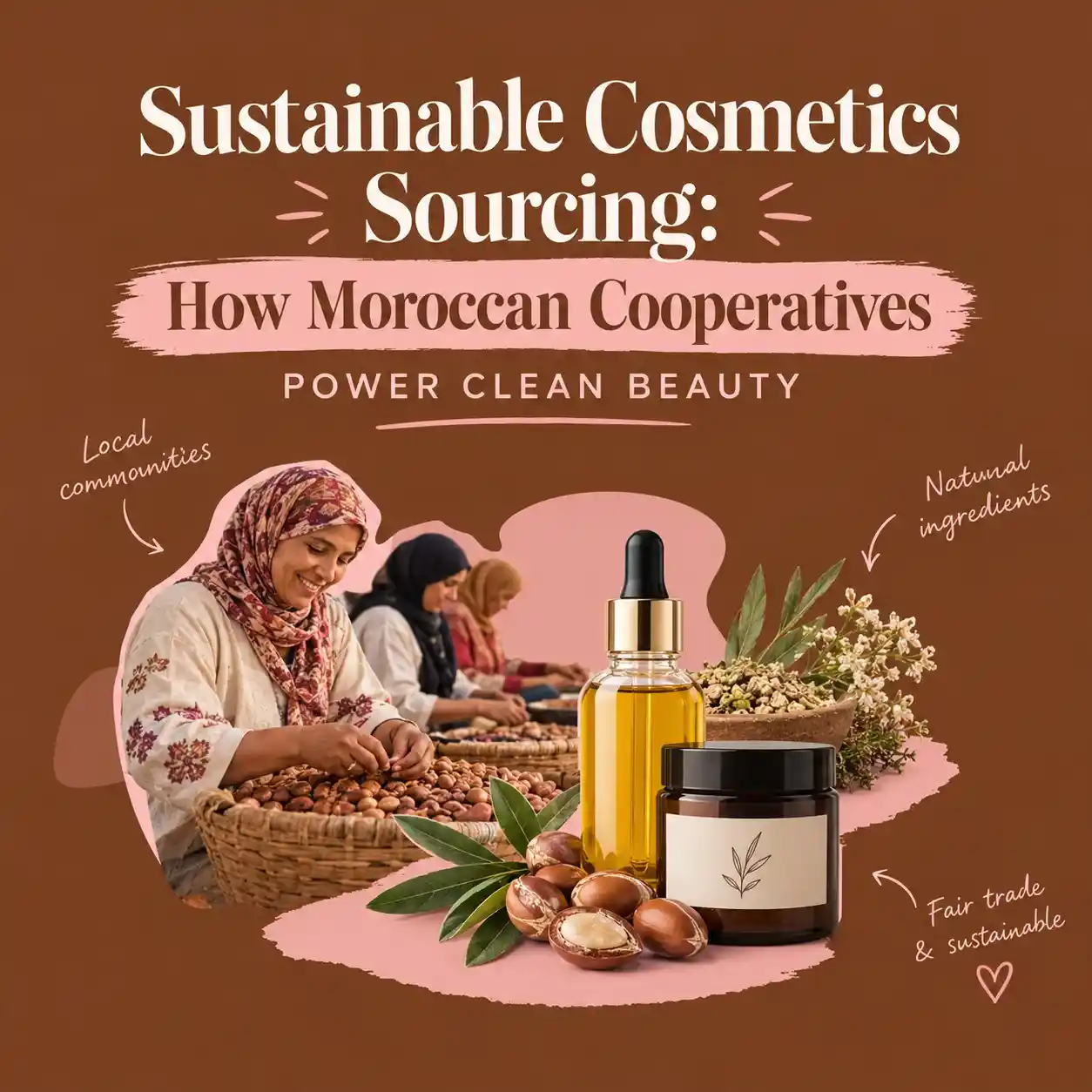
The Paradigm Shift in Clean Beauty Sourcing
The global beauty industry is experiencing a profound structural transition. Modern consumers no longer define premium cosmetics purely by immediate efficacy or luxurious packaging; today’s market demands verifiable supply chain transparency, environmental stewardship, and social equity. Clean beauty has evolved from a niche marketing term into a rigorous regulatory and formulation standard, requiring cosmetic brands to scrutinize every link in their ingredient supply chains.
At the center of this global evolution lies Morocco’s network of agricultural women's cooperatives. These cooperatives have transformed the landscape of sustainable cosmetics sourcing, acting as the primary engine behind ethically harvested botanicals like organic argan oil, prickly pear seed oil, ghassoul clay, and rose hydrosol. By bridging ancient ancestral harvesting techniques with international quality assurance standards, Moroccan cooperatives provide beauty brands with a resilient, traceable, and socially impactful raw material foundation.
What Are Moroccan Agricultural Cooperatives?
Moroccan agricultural cooperatives are community-based enterprises primarily owned and operated by rural Berber (Amazigh) women. Developed rapidly over the past three decades with support from international development agencies and local governance, these cooperatives formalize traditional harvesting knowledge into economically sustainable business structures.
Historically, the extraction of valuable raw materials such as argan oil was localized, highly labor-intensive, and vulnerable to economic exploitation by unorganized middle merchants. The cooperative model centralized processing, established fair wage structures, and granted rural women direct participation in global trade. Today, these institutions provide vital economic independence, educational programs, healthcare access, and literacy initiatives for thousands of families in rural regions across the Souss-Massa, Dades Valley, and Atlas regions.
"Ethical sourcing is no longer an optional brand story—it is an operational requirement for clean beauty brands seeking long-term resilience and authentic consumer trust."
How Cooperatives Power the Clean Beauty Ingredient Portfolio
Clean beauty formulations depend on raw, minimally processed, cold-pressed, and non-toxic ingredients. Moroccan cooperatives serve as direct stewards for several of the beauty industry’s most coveted natural actives:
- Cold-Pressed Organic Argan Oil (Argania Spinosa): Hand-picked and hand-cracked by cooperative artisans, ensuring the kernel remains intact before cold mechanical extraction. This meticulous manual handling preserves peak concentrations of Vitamin E, squalene, and essential fatty acids.
- Prickly Pear Seed Oil (Opuntia Ficus-Indica): Known for its extraordinary vitamin K and sterol profile, extracting one liter of this ultra-precious oil requires over one million seeds. Cooperatives meticulously collect and wash seeds from local cactus harvests, delivering unmatched quality to high-end skincare formulators.
- Botanical Extracts and Powders: Beyond oils, cooperatives harvest regional specialties such as wild-harvested authentic Moroccan Nila powder and traditional sun-dried poppy petals used in crafting clean pigment formulations like Aker Fassi.
- Exfoliating Mineral Clays & Soaps: Pure Atlas Mountains Ghassoul clay and traditional olive oil-based black soap are processed according to ancestral methods without synthetic additives, catering to clean body care trends and specialized treatments for conditions like natural physical skin exfoliation.
Environmental Stewardship and Ecological Balance
Sustainable sourcing extends beyond social equity; it must protect vulnerable ecosystems. Moroccan cooperatives operate at the frontline of ecological conservation, particularly within the UNESCO-designated Arganeraie Biosphere Reserve.
The endemic Argan tree acts as an indispensable ecological barrier against desertification and soil erosion on the edge of the Sahara Desert. Cooperatives practice low-impact, sustainable harvesting that avoids damaging wild trees. Furthermore, the economic valuation of the argan forest through cosmetic trade incentivizes local communities to protect these wild groves from deforestation and overgrazing.
Zero-Waste Processing Models
Moroccan cooperatives naturally operate under zero-waste principles:
- Fruit Pulp: Used as nutrient-rich livestock feed for local farm animals.
- Hard Nut Shells: Burned as an eco-friendly heat source or finely ground into natural biodegradable cosmetic exfoliants.
- Press Cake (Sediment): Rich in saponins and proteins, the residual meal left after oil extraction is repurposed into clarifying natural face masks and hair treatments.
Comparative Analysis: Cooperative Sourcing vs. Industrial Mass Supply
| Sourcing Parameter | Moroccan Women's Cooperatives | Industrial Commodity Supply |
|---|---|---|
| Social Impact | Direct community reinvestment, fair wages, women’s empowerment | Profit concentrated in intermediary corporate entities |
| Traceability | High; origin traceable to specific regional cooperatives | Low; blended batches from unverified multiple suppliers |
| Processing Integrity | First cold-pressed, unrefined, artisanal temperature control | High-heat extraction, chemical solvent (hexane) refining |
| Environmental Footprint | Biodiversity preservation, zero-waste, forest protection | Industrial land clearing, higher energy consumption |
| Purity & Active Retention | Preserved bioactive compounds (tocopherols, polyphenols) | Potential degradation due to thermal and chemical processing |
Navigating Quality Assurance, Testing, and Compliance
While the social and ecological narratives of cooperative sourcing are compelling, international cosmetic brands must maintain strict regulatory compliance, batch-to-batch consistency, and microbiological safety. One of the primary historical challenges in direct cooperative sourcing was raw material variability.
Today, forward-thinking export partners work directly with cooperatives to bridge the gap between rural production and international cosmetic compliance. Raw materials collected from cooperatives undergo standardized analytical testing, including gas chromatography-mass spectrometry (GC-MS) to verify fatty acid profiles and ensure the complete absence of adulteration, heavy metals, or chemical solvent residues.
To safeguard supply chain integrity, brands must understand technical parameters and purity benchmarks. For a detailed technical walkthrough on verifying oil integrity, review our complete guide on how to spot fake argan oil through analytical purity testing.
Integrating Cooperative-Sourced Ingredients into Your Brand Strategy
For emerging beauty brands and established enterprise lines alike, integrating cooperative-sourced Moroccan botanicals offers a distinct competitive advantage in a crowded market. Brands can leverage these ingredients across various manufacturing models:
1. Private Label & Custom Formulation
Integrating certified cooperative ingredients into custom formulations allows brands to craft unique, high-performing skincare products backed by validated clinical efficacy and rich cultural heritage. Choosing between manufacturing models depends heavily on brand positioning and speed-to-market goals. Read our guide on white label vs private label cosmetics manufacturing to determine the ideal production route for your clean beauty venture.
2. Transparent Supply Chain Storytelling
Modern consumers actively research brand claims. Providing clear traceability data—such as highlighting the specific cooperative region, certifications (Ecocert, USDA Organic, ISO 22716), and fair-trade practices—builds durable consumer loyalty and insulates brands against accusations of greenwashing.
Frequently Asked Questions
What makes cooperative-sourced argan oil superior to industrially extracted oil?
Cooperative-sourced argan oil is typically extracted using gentle mechanical cold-pressing techniques without chemical solvents like hexane. Manual selection of unblemished nuts by skilled cooperative members ensures lower free fatty acid levels, preserving delicate antioxidants, sterols, and natural tocopherols.
How do Moroccan cooperatives support rural socio-economic stability?
Cooperatives provide stable, fair-wage employment directly to women in rural communities where economic opportunities are otherwise limited. Profits are reinvested locally to fund adult literacy classes, childcare facilities, regional health initiatives, and sustainable agricultural equipment.
Are products sourced from Moroccan cooperatives certified organic and fair trade?
Many established Moroccan cooperatives work in partnership with professional exporters to maintain international certifications, including Ecocert, USDA Organic, Fair Trade, and ONSSA (Moroccan Food Safety Authority) compliance, making them suitable for global clean beauty formulations.
How can brands ensure supply chain security when sourcing from cooperatives?
Brands should partner with reputable, on-the-ground manufacturing and export partners in Morocco who maintain structured relationships with cooperative networks. This ensures consistent batch volumes, rigorous quality control testing, streamlined international logistics, and year-round inventory stability.
Conclusion: Building the Future of Clean Beauty
Sustainable cosmetics sourcing is no longer merely a trend; it is the fundamental framework of modern cosmetic science and supply chain management. Moroccan agricultural cooperatives represent a powerful proof-of-concept: showing how ancestral agricultural wisdom, biodiversity conservation, and social equity can seamlessly integrate with global industrial demands.
By incorporating authentic, cooperative-sourced Moroccan ingredients into clean beauty product lines, cosmetic brands secure uncompromised raw material purity while actively empowering rural communities and preserving vital ecological biomes for future generations.