Blue Nila vs Indigofera: Sourcing Authentic Moroccan Nila
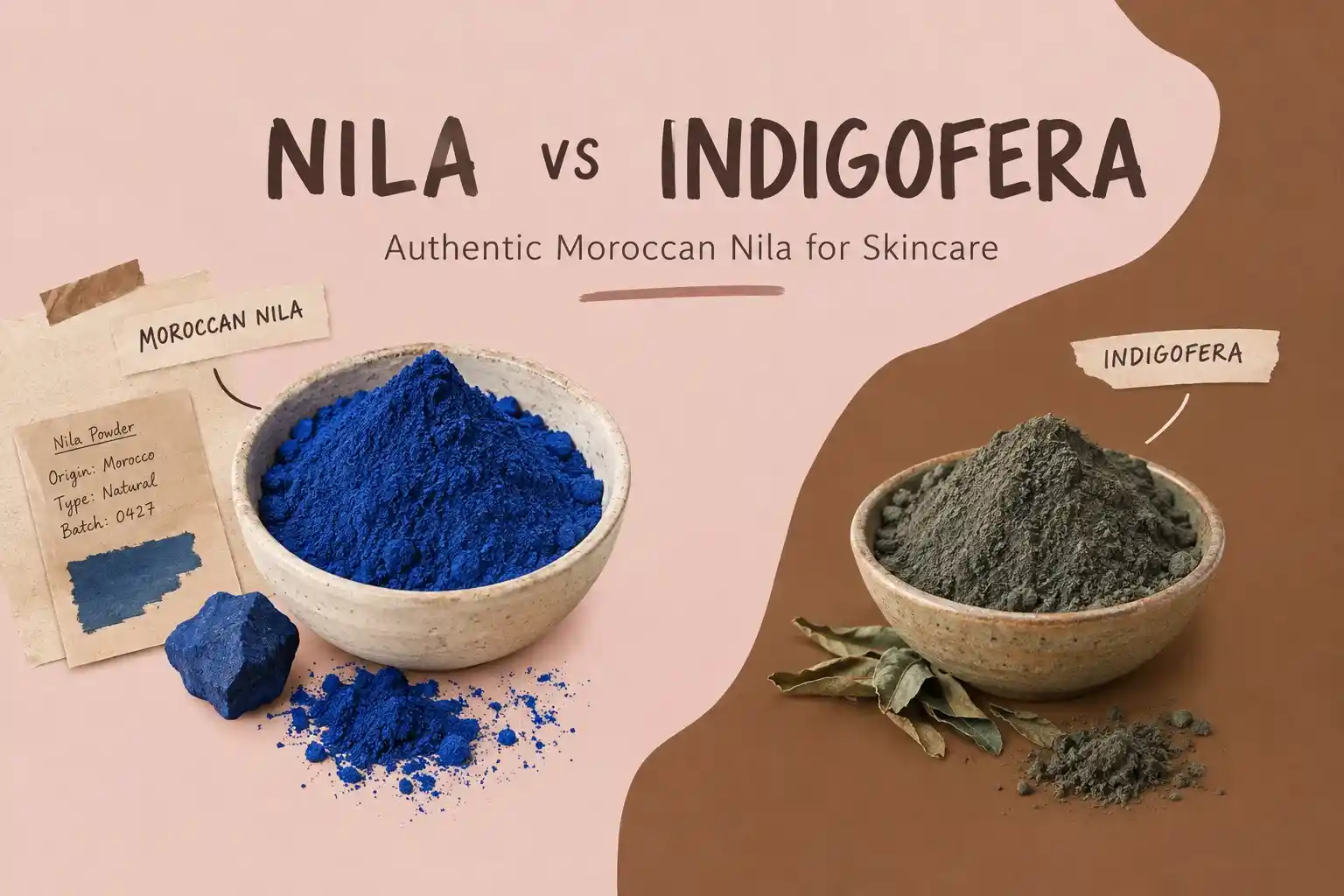
In recent years, traditional North African skincare ingredients have taken center stage in global clean beauty and cosmetic manufacturing. Among these botanical treasures, Blue Nila Powder (known locally in Morocco as Nila Zarka) has gained widespread popularity for its remarkable ability to reduce hyperpigmentation, brighten uneven skin tone, and restore luminous skin clarity. However, as global demand rapidly accelerates, market confusion and adulteration have become significant concerns for both cosmetic formulators and consumers alike.
The primary source of confusion lies in distinguishing genuine Moroccan Blue Nila from conventional Indigofera tinctoria (standard indigo powder used primarily for hair dyeing and textiles) as well as cheap synthetic dye powders sold online. Sourcing authentic, cosmetic-grade Moroccan Nila requires a deep understanding of botanical origins, traditional extraction methods, and key purity indicators. This comprehensive guide breaks down the differences between Blue Nila powder and Indigofera, explores the science of natural skin brightening, and outlines best practices for sourcing pure Moroccan Nila for formulation and personal care.
Understanding the Difference: Blue Nila Powder vs. Indigofera
To navigate the raw ingredients market effectively, cosmetic brand owners, sourcing directors, and formulators must understand what differentiates traditional Moroccan Nila from standard commercial indigo plants.
| Property | Authentic Moroccan Blue Nila (Nila Zarka) | Standard Indigo Powder (Indigofera Tinctoria) |
|---|---|---|
| Primary Botanical Source | Indigofera suffruticosa / Moroccan mineral-herb compound process | Indigofera tinctoria dried leaf powder |
| Primary Historical Use | Facial & body skin brightening, bath rituals (Hammam) | Hair dye, fabric and textile dyeing |
| Solubility & Texture | Ultra-fine micro-powder, blends smoothly into clays and oils | Grainy leaf fibers, water-activated paste |
| Staining Tendency | Washes clean off skin without leaving permanent blue tint | Leaves strong blue/green stain on skin, nails, and textiles |
| Skincare Action | Inhibits dark spot buildup, calms inflammation, unifies tone | Mainly colors hair shafts; low soothing cosmetic benefit |
What Is Authentic Moroccan Blue Nila (Nila Zarka)?
Moroccan Blue Nila is a unique botanical ingredient rooted in Sahrawi beauty traditions from Southern Morocco. Traditionally extracted from specific indigo-bearing shrubs (primarily Indigofera suffruticosa) through an ancient settling and sun-drying process, Nila Zarka produces a vibrant, sky-blue mineralized pigment rather than raw pulverized leaf material. In traditional Moroccan Hammams, women mix Nila powder with Moroccan Black Soap, natural yogurt, or Ghassoul clay to lighten sun spots, calm irritations, and balance hyperpigmentation.
What Is Commercial Indigofera Powder?
Commercial indigo powder, derived predominantly from Indigofera tinctoria leaves grown in India, East Asia, or parts of Africa, is manufactured by drying and crushing raw leaves. While high in plant pigment, raw Indigofera leaf powder contains abrasive vegetal fibers, tannins, and strong dye precursors designed to adhere to keratin fibers (hair) or fabrics. When applied directly to facial skin, unrefined Indigofera leaf powder can stain the epidermis blue, cause localized skin irritation, and clog delicate pores.
How Blue Nila Brightens Hyper-pigmented Skin
The term "skin whitening" in modern cosmetic science refers to gentle, non-destructive skin tone unification, reduction of post-inflammatory hyperpigmentation (PIH), and fading of dark spots caused by UV exposure. Unlike chemical bleaching agents like hydroquinone, authentic Moroccan Nila brightens skin safely and naturally through three key mechanisms:
- Melanin Regulation & Antioxidant Defense: Rich in biological antioxidants and bioflavonoids, Nila helps neutralize free radicals triggered by UV radiation and environmental pollution, preventing excess melanin synthesis.
- Gentle Micro-Exfoliation: When incorporated into masks or body scrubs, ultra-fine Nila micro-particles help slough off dead, melanin-rich epidermal cells without causing micro-tears. This makes it an ideal ingredient when learning how to lighten dark knees and elbows naturally, where skin is thicker and prone to friction-induced darkening.
- Visual Color Correction (Optical Brightening): Blue and orange/brown are complementary colors on the color wheel. The micro-fine blue pigments in pure Nila visually neutralize yellowish, dull, or muddy undertones on the skin instantly, giving an immediate impression of clarity and brightness.
The Risks of Counterfeit Nila in the Global Market
Because authentic Moroccan Nila requires labor-intensive harvesting and traditional refining, low-cost imitations flood online marketplaces and international trade channels. Using fake Nila poses severe risks to brand reputation and consumer health:
1. Synthetic Chemical Dyes
Many cheap "blue powders" sold as Nila are simply industrial talc or kaolin mixed with synthetic textile dyes like CI 42090 (FD&C Blue No. 1) or copper sulfate. Applying industrial dyes to delicate facial skin can lead to severe allergic contact dermatitis, chemical burns, or permanent staining.
2. High Heavy Metal Contamination
Unregulated mineral dyes sourced from uncontrolled industrial areas can contain unacceptable levels of lead, arsenic, and cadmium. Responsible skincare brands must verify that their raw materials adhere to strict European Cosmetic Regulation (EC No 1223/2009) or FDA safety guidelines, supported by independent European Commission cosmetic safety standards.
3. Raw Textile Indigo Substituted for Cosmetic Nila
Selling coarse, unsterilized Indigofera leaf powder as Moroccan Nila leads to poor product performance, consumer dissatisfaction from blue skin staining, and potential bacterial contamination in anhydrous oil or aqueous cosmetics.
Sourcing Authentic Moroccan Nila: Quality Assurance Checklist
Whether you are purchasing raw materials for artisanal manufacturing or partnering with contract packaging facilities, ensure your supply chain satisfies these key authenticity checks:
1. Request Official Certificates of Analysis (CoA)
Every legitimate supplier of Moroccan Blue Nila should provide batch-specific documentation, including:
- Microbiological Testing: Confirming absence of E. coli, Staphylococcus aureus, mold, and yeast.
- Heavy Metals Analysis: Verifying lead, arsenic, mercury, and cadmium levels fall well within international safe cosmetic limits.
- INCI Composition: Confirming plant origins or approved cosmetic colorant designations rather than industrial chemical additives.
2. Conduct Physical and Physical-Chemical Verification
Genuine Nila powder possesses distinctive physical characteristics:
- Color: Soft, matte royal-blue or deep sky-blue tone (never fluorescent or artificially intense).
- Texture: Silky, velvety ultra-fine powder that disperses easily without gritty leaf granules.
- Skin Washability Test: When mixed with a small amount of warm water or oil and applied to skin for 15 minutes, authentic Moroccan Nila rinses away cleanly with mild soap, leaving skin refreshed rather than dyed bright blue.
3. Verify the Country of Origin and Botanical Sourcing
Authentic Nila Zarka is inextricably linked to Southern Moroccan harvesting and processing traditions. Sourcing directly from reputable suppliers rooted in Morocco ensures batch traceability, supports local indigenous harvesting communities, and maintains raw ingredient authenticity.
Formulating with Moroccan Blue Nila in Skincare Lines
Blue Nila is remarkably versatile in natural skincare formulations. It integrates seamlessly into waterless formulations, dry clay blends, creams, and traditional body care treatments.
Complementary Moroccan Ingredients for Synergistic Formulas
To maximize skin brightening and anti-aging benefits, product developers frequently combine Blue Nila with other iconic North African raw materials:
- Aker Fassi & Nila Combos: While Nila provides cool-toned brightening, combining botanical preparations with traditional red poppy powder allows formulators to create multi-functional masks and skin-revitalizing treatments. Learn more about botanical formulations in our guide on DIY Aker Fassi tint and terracotta rouge guides.
- Botanical Oils for Dry Skin & Pigmentation: Blending Nila masks with high-purity carrier oils prevents epidermal moisture loss. Choosing between high-linoleic oils like prickly pear seed oil or argan oil depends on target skin type; see our detailed breakdown on prickly pear seed oil vs. argan oil for anti-aging skincare.
- Exfoliating Scrub Lines: Nila works synergistically with Moroccan Black Soap and Kessa gloves to address rough, hyper-pigmented areas. This method is highly effective not only for dark spots but also when advising customers on how to treat keratosis pilaris naturally with Moroccan exfoliation.
Scaling Your Skincare Brand: Private Label & Manufacturing Considerations
For entrepreneurs and growing beauty businesses looking to introduce Nila-based brightening masks, soaps, or body polishes to their catalog, working with an experienced manufacturing partner is critical. Scaling requires consistent raw material purity, standardized mixing protocols, and compliant labeling.
Understanding whether to formulate custom recipes or utilize pre-tested white label bases is essential for long-term growth. To evaluate the best path for your beauty brand, review our comprehensive analysis on white label vs. private label cosmetics for Moroccan beauty brands.
Frequently Asked Questions About Blue Nila Powder
Does authentic Blue Nila permanently stain the skin blue?
No. Authentic cosmetic-grade Moroccan Nila Zarka does not stain skin permanently. When mixed into a mask or soap and applied properly, it washes off cleanly with warm water or mild cleanser, leaving behind a clear, luminous complexion.
How does Blue Nila differ from chemical skin lightening ingredients?
Unlike aggressive chemical lighteners (such as hydroquinone or concentrated bleaching agents) that strip the skin barrier or shut down melanin production harshly, Blue Nila works through gentle physical micro-exfoliation, antioxidant balancing, and immediate optical tone neutralization without irritating or thinning the skin barrier.
Can Blue Nila powder be used on sensitive skin?
Yes, pure Moroccan Nila is inherently soothing and non-irritating. However, because counterfeit powders containing synthetic textile dyes are common, sensitive skin types should always ensure their product is 100% pure, third-party tested, and patch-tested before full application.
How often should a Blue Nila face mask be applied?
For optimal skin tone evening and radiance, a Nila-infused clay or yogurt mask is typically applied 1 to 2 times per week. Over-use is unnecessary, as regular consistent application yields the best long-term results for dark spots and hyperpigmentation.
Final Thoughts: Prioritizing Purity for Radiant Results
Understanding the essential differences between authentic Blue Nila Powder and standard Indigofera dye leaf powder is vital for any beauty brand or consumer seeking legitimate skin brightening results. While Indigofera tinctoria remains a valuable natural dye for hair, only pure, cosmetic-grade Moroccan Nila Zarka delivers the gentle, non-staining, and clarifying properties required for high-performance skincare. By emphasizing batch traceability, rigorous safety testing, and authentic Moroccan sourcing, formulators and consumers alike can harness the true power of North Africa's most famous blue beauty secret.