Saffron-Infused Oil for Luxury Skincare Lines: Procurement, Cost Analysis & Quality Control
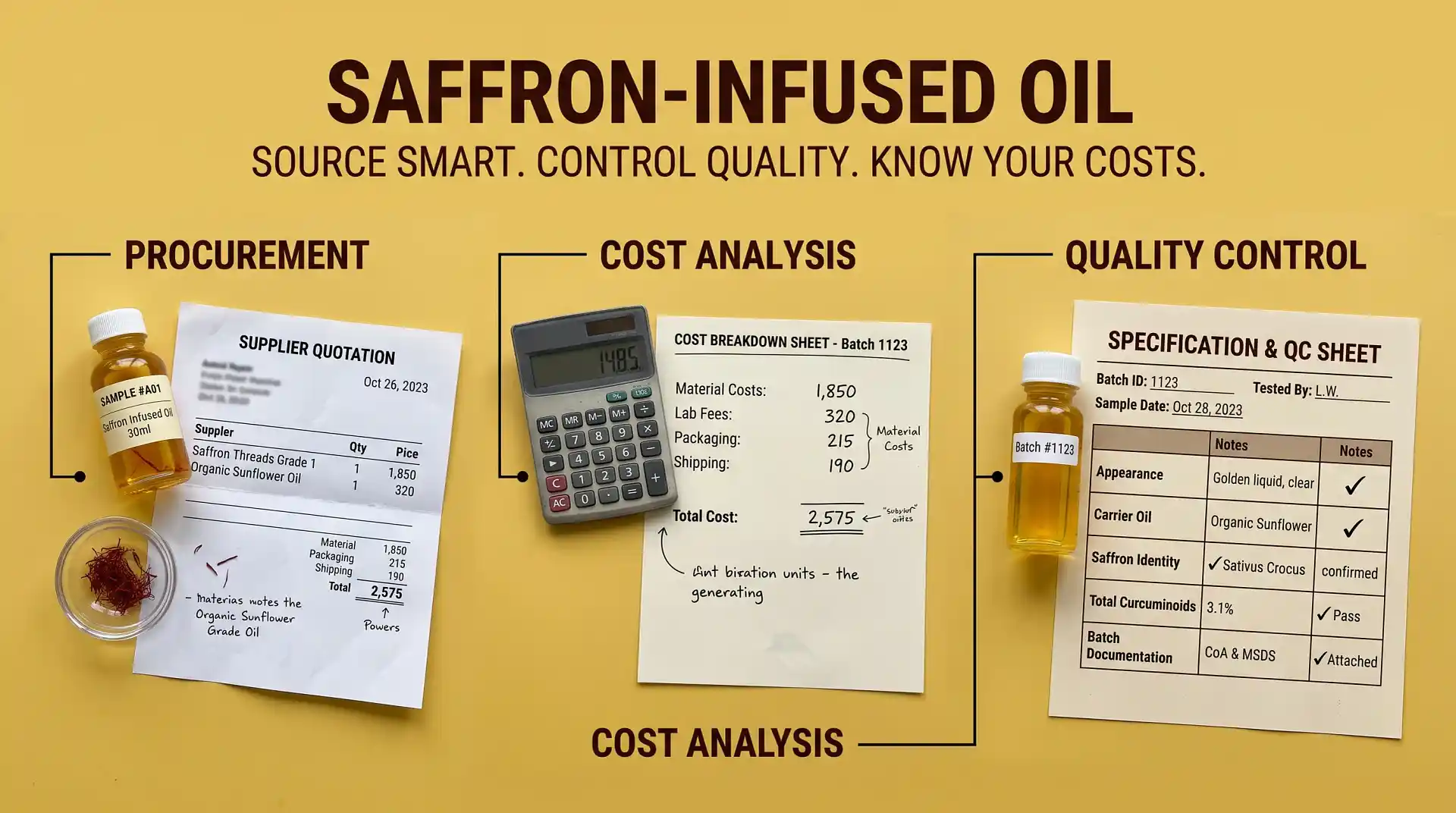
In the high-margin market of luxury skincare, few botanical ingredients carry the prestige, historical weight, and clinical promise of Crocus sativus (Saffron). Known as red gold, saffron has transitioned from ancient beauty rituals into scientific formulation labs as a powerful antioxidant, anti-inflammatory, and skin-brightening active. However, integrating saffron-infused oil into a premium cosmetics line presents distinct commercial challenges: extreme raw material volatility, risk of adulteration, complex extraction parameters, and stringent quality control demands.
For procurement directors, cosmetic chemists, and beauty brand founders, establishing a resilient and scalable supply chain for saffron oil requires a deep understanding of harvest origin, carrier oil selection, analytical chemistry, and financial unit economics. This article provides a comprehensive B2B framework for procuring, costing, and testing high-purity saffron-infused oil for luxury skincare manufacturing.
1. Saffron-Infused Oil Procurement: Sourcing Channels & Botanical Specifications
Procuring cosmetic-grade saffron-infused oil begins with raw material verification. Saffron is derived from the dried stigmas of the Crocus sativus flower. Because it takes upwards of 150,000 flowers to yield a single kilogram of dried saffron, the global market is rife with middleman markups and adulteration. Sourcing teams must evaluate both the active botanical (saffron stigmas) and the vehicle (carrier oil).
ISO 3632 Standards & Saffron Grading
Before infusion, raw saffron must be certified under ISO 3632, the international benchmark measuring the concentration of three key secondary metabolites:
- Crocin: Responsible for the golden-red pigmentation and intense free-radical scavenging capacity.
- Picrocrocin: Imparts the signature bitter taste and serves as a precursor to essential aromatic molecules.
- Safranal: The primary volatile compound responsible for aroma and skin-soothing, antimicrobial benefits.
Luxury cosmetic formulations should strictly insist on ISO 3632 Category I (Grade I) raw saffron, which demands a minimum absorbance reading for crocin at 440 nm of >190. Sourcing lower-grade saffron (Categories II or III) significantly impairs the final product's bioactivity and color intensity.
Selecting the Ideal Carrier Oil Base
Saffron stigmas cannot be used raw on the skin; their lipophilic active constituents must be extracted into a lipid matrix. The choice of carrier oil directly impacts skin feel, oxidative stability, absorption rates, and marketing claims. Popular bases for luxury lines include:
- Cold-Pressed Moroccan Argan Oil: Rich in oleic and linoleic acids, vitamin E, and plant sterols. Argan oil complements saffron's anti-aging profile by supporting lipid barrier repair. When sourcing, evaluate cosmetic-grade argan oil cold-pressed specifications to ensure low free fatty acids and optimal peroxide values.
- Prickly Pear Seed Oil: Extremely rich in Vitamin K and essential fatty acids, ideal for ultra-luxury brightening eye serums.
- Plant-Derived Squalane or Caprylic/Capric Triglyceride (MCT): Clear, odorless, highly stable vehicles that provide a light, non-greasy aesthetic while highlighting the rich amber tint of infused saffron.
Direct Cooperative Sourcing vs. Supply Chain Brokers
To secure batch-to-batch consistency and competitive pricing, brands should evaluate their sourcing model. Working directly with agricultural cooperatives in primary production regions (such as Morocco's Taliouine region or Iran's Khorasan region) eliminates excessive markups and establishes direct traceability. Learn more about navigating these direct-vs-broker supply models in our guide on sourcing bulk cosmetics through cooperatives vs. middlemen.
2. Cost Analysis & Financial Feasibility
| Cost Component | Estimated Industry Range (USD) | Impact on Final Formula Cost |
|---|---|---|
| Grade I Saffron Stigmas (Bulk) | $2,500 – $6,000 / kg | High (Dependent on infusion concentration) |
| Organic Carrier Oil (e.g., Argan/Jojoba) | $25 – $60 / Litre | Moderate |
| Ultrasonic / Cold Maceration Processing | $15 – $35 / Litre | Low to Moderate |
| HPLC & Safety Testing (per batch) | $300 – $800 / test run | Fixed / amortized across volume |
Designing a luxury product featuring saffron-infused oil requires balancing efficacy claims with realistic unit cost targets (COGS). Because raw saffron prices fluctuate based on seasonal yields and geopolitical factors, cosmetic brand procurement leaders must run detailed cost-benefit sensitivity analyses.
Infusion Ratio & Concentration Economics
The concentration of saffron in carrier oil usually ranges between 0.1% to 1.0% (w/v) depending on whether the oil is utilized as an active base or a booster complex:
- 0.1% Infusion Ratio (1 gram raw saffron per 1,000 ml carrier oil): Provides a delicate warm hue, subtle therapeutic fragrance, and measurable antioxidant properties. Adds approximately $3.00–$5.00 to the raw material cost per liter of base oil.
- 0.5% Infusion Ratio (5 grams raw saffron per 1,000 ml carrier oil): Delivers a deep golden-amber tint, rich botanical aroma, and potent clinically relevant bioactivity. Adds approximately $15.00–$25.00 per liter.
- 1.0% Infusion Ratio (10 grams raw saffron per 1,000 ml carrier oil): Used for high-potency targeted facial elixirs and night treatments. Adds $30.00–$50.00+ per liter in raw material costs alone.
When manufacturing a 30 ml luxury serum with a $120.00 retail price (MSRP), a raw active cost of $1.50 to $3.00 per bottle for saffron-infused oil falls comfortably within standard luxury margin requirements (where total unit COGS typically stays under 10–15% of MSRP).
Procurement Best Practices to Optimize Margins
- Contract Forward Volume: Secure annual bulk contracts post-harvest (typically October–November) to hedge against raw saffron price surges during mid-year supply deficits. Refer to our guide on buying organic carrier oils wholesale to align lipid carrier harvests with saffron harvesting seasons.
- Standardize Infusion Extraction Yields: Utilize modern ultrasonic-assisted extraction (UAE) or controlled low-temperature maceration rather than passive steeping. UAE increases crocin extraction efficiency by up to 35% in a fraction of the time, lowering processing operational expenditure per liter.
3. Quality Control, Adulteration Detection & Analytical Testing
Saffron is historically one of the most frequently adulterated botanical ingredients globally. When purchasing pre-infused saffron oil or bulk raw stigmas for in-house infusion, stringent quality assurance (QA) and quality control (QC) protocols are non-negotiable.
"Without rigorous chromatographic verification, beauty brands risk formulating with synthetic oil-soluble dyes or degraded floral extracts that offer zero cosmetic efficacy and invite regulatory penalties."
Common Saffron Adulterants in Lipid Solutions
Unscrupulous suppliers often employ sophisticated tactics to simulate genuine saffron-infused oil:
- Marigold (Tagetes erecta) & Safflower (Carthamus tinctorius): Natural extracts that replicate saffron's yellowish hue at a fraction of the price, but lack safranal and high crocin content.
- Synthetic Colorants (Sudan Dyes, Metanil Yellow): Toxic chemical dyes added to cheap carrier oils to mimic an authentic golden tint.
- Exogenous Fragrances: Synthetic safranal or artificial fragrance oils added to cover up stale, oxidized base oils.
Required Analytical Verification Methods
To safeguard your formulation and maintain compliance under the regulatory frameworks established by the European Commission (EU Cosmetic Regulation 1223/2009) and the US FDA MoCRA, insist on receiving a comprehensive Certificate of Analysis (CoA) containing the following analytical tests:
- HPLC (High-Performance Liquid Chromatography): Quantifies safranal, crocin, and picrocrocin levels. HPLC profiles serve as a biological fingerprint, making adulteration with safflower or synthetic dyes immediately obvious.
- GC-MS (Gas Chromatography-Mass Spectrometry): Verifies the natural volatile profile of safranal while ruling out synthetic aromatic additives and chemical solvents.
- Peroxide Value (PV) & Free Fatty Acids (FFA): Measures the oxidative state of the carrier oil base. High peroxide values indicate lipid oxidation, which degrades saffron active compounds and causes premature product rancidity. Learn more about testing carrier stability in our guide to carrier oil purity testing.
- Heavy Metal & Microbiological Screening: Ensures levels of Lead, Arsenic, Cadmium, and Mercury fall well below statutory cosmetic limits, alongside complete absence of Candida albicans, Pseudomonas aeruginosa, and Staphylococcus aureus.
4. Formulation Stability & Packaging Considerations
Because crocin and safranal are sensitive to photo-oxidation and thermal degradation, careful formulation and packaging architecture are essential to maintain product shelf-life (ideally 12 to 24 months PAO).
Formulation Stability Best Practices
- Antioxidant Synergy: Always co-formulate saffron oil infusions with 0.5%–1.0% mixed natural tocopherols (Vitamin E) or Rosemary Leaf Extract (Rosmarinus officinalis). Research published in scientific literature on cosmetic science shows that combining lipophilic antioxidants with carotenoid-rich botanical oils significantly delays lipid peroxidation (see PubMed research on carotenoid stabilization in lipids).
- Water-Free Systems: Saffron-infused oil performs best in anhydrous serums, rich face balms, and oil-based cleansers. In emulsion-based systems (O/W creams), ensure proper encapsulation or liposomal delivery systems to protect active constituents from hydrolysis.
Primary Packaging Requirements
Avoid clear glass or transparent PET containers. Light exposure rapidly bleaches crocin's golden color into a dull pale yellow, diminishing both visual appeal and antioxidant potency. Luxury brands should utilize:
- Biophotonic / Violet Glass (e.g., Miron Glass): Blocks the visible light spectrum while permitting penetration of UVA and infrared spectrums, preserving saffron vitality.
- Amber or Opaque Coated Glass Bottles: Highly effective light-blocking barriers suitable for high-volume luxury distribution.
- Airless Dropper Systems: Reduces ongoing head-space exposure to ambient oxygen during consumer usage.
When building out your product line, read our extensive manual on private label skincare ingredients and packaging selection.
5. Frequently Asked Questions (FAQ)
What is the standard INCI name for saffron-infused oil?
Because saffron-infused oil consists of active botanical stigmas infused into a carrier base, the standard INCI listing typically appears as two ingredients: [Carrier Oil INCI] (and) Crocus Sativus Stigma Extract. For example: Argania Spinosa Kernel Oil (and) Crocus Sativus Stigma Extract.
What is the optimal shelf-life of high-grade saffron-infused oil?
When stored in airtight, light-protected amber or violet glass containers at controlled room temperature (15–25°C), high-grade saffron-infused oil maintains stability for 18 to 24 months. Adding natural mixed tocopherols (Vitamin E) is highly recommended to prevent premature carrier oxidation.
Can synthetic dyes mimic saffron oil in color tests?
Yes. Synthetic dyes like Metanil Yellow or Sudan Dyes can visually mimic the color of authentic saffron oil. Spectrophotometry alone is insufficient to detect these adulterants; HPLC testing is required to verify the presence and concentration of natural crocin and safranal.
Why choose an infusion over a CO2 supercritical extract?
While supercritical CO2 extraction yields highly concentrated isolated actives, direct oil infusion (maceration or UAE) preserves the whole botanical matrix along with lipophilic phytosterols from the carrier oil. This delivers a traditional, holistic cosmetic aesthetic highly prized in prestige and clean beauty market segments.
Conclusion: Key Procurement Steps for Beauty Brands
Integrating high-purity saffron-infused oil into a luxury skincare line allows brands to blend ancient prestige with modern scientific performance. To ensure success, procurement managers should enforce rigorous supplier vetting: insist on Grade I ISO 3632 raw saffron, select stable carrier lipids like cold-pressed argan oil, require full HPLC/GC-MS testing for every batch, and protect final formulations in light-blocking biophotonic packaging.