Private Label Moroccan Skincare Guide: Ingredients & Suppliers
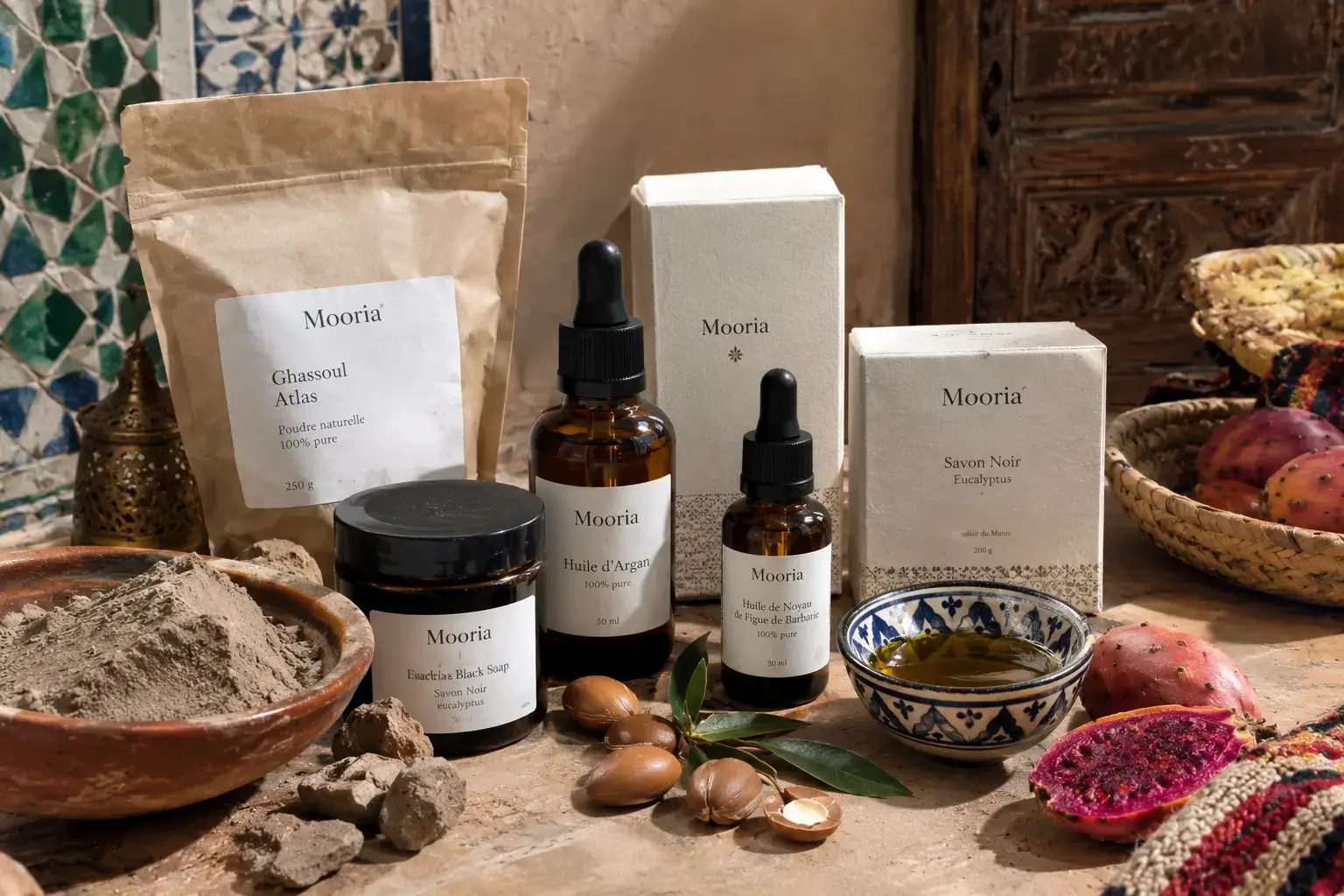
The global demand for clean, heritage-driven, and natural skincare products has propelled traditional Moroccan ingredients to the forefront of the global beauty industry. From ultra-hydrating Argan oil and precious Prickly Pear seed oil to mineral-rich Rhassoul clay and Damask rose hydrosol, Moroccan beauty rituals offer proven efficacy combined with a compelling storytelling narrative. For cosmetics brands, indie beauty founders, and spa suppliers looking to enter or expand within this lucrative niche, launching a private label Moroccan skincare line represents a high-margin, scalable opportunity.
However, bringing an authentic Moroccan beauty line to market requires more than just sourcing bulk ingredients. Brand owners must navigate formulation stability, select appropriate protective packaging, ensure international regulatory compliance, and partner with qualified local manufacturers. This comprehensive guide details the essential ingredients, packaging best practices, and supplier selection criteria required to build a successful private label Moroccan skincare brand.
1. Essential Moroccan Skincare Ingredients for Private Label Lines
Building a standout private label collection starts with understanding the unique chemistry, skin benefits, and commercial application of signature Moroccan botanical ingredients.
Organic Cold-Pressed Argan Oil (Argania Spinosa)
Known globally as liquid gold, pure Argan oil remains the foundation of Moroccan beauty. Rich in essential fatty acids (linoleic and oleic acid), vitamin E (tocopherols), and squalene, Argan oil provides deep hydration, repairs the skin's lipid barrier, and protects against environmental stressors.
- Cosmetic Grade (Deodorized vs. Unrefined): For facial serums and hair oils, deodorized Argan oil removes the natural nutty aroma without compromising nutrient integrity, appealing to consumers who prefer fragrance-free or lightly scented formulations. Unrefined Argan oil retains its natural aroma, ideal for authentic hammam-inspired body care.
- Key Formulations: Facial oils, anti-aging serums, hair treatment oils, body lotions, and beard oils.
Prickly Pear Seed Oil (Opuntia Ficus-Indica)
Prickly Pear seed oil is one of the most luxury-tier ingredients in natural skincare. Requiring roughly one ton of cactus fruit to extract a single liter of oil, it boasts exceptionally high concentrations of Vitamin E (over 1000 mg/kg) and unsaturated fatty acids, primarily linoleic acid (Omega-6).
- Skin Benefits: Exceptional cellular regeneration, reduction of hyperpigmentation, brightening of under-eye dark circles, and intense antioxidant protection.
- Key Formulations: High-performance night serums, eye contour oils, and targeted anti-aging remedies.
Traditional Moroccan Black Soap (Savon Noir)
Moroccan Black Soap, or Beldi soap, is a dark paste formulated from saponified olive oil and macerated black olives. It is widely used in traditional hammam exfoliation rituals alongside a Kessa glove.
When planning your product line, it is essential to distinguish between regional body soaps. While both offer deep cleansing properties, understanding the clear difference between African Black Soap and Moroccan Black Soap is crucial for marketing and positioning. Moroccan Black Soap features an olive-oil base with a smooth, gel-like paste texture designed for skin softening prior to physical exfoliation.
Rhassoul (Ghassoul) Clay
Mined exclusively from deposits in the Atlas Mountains of Morocco, Rhassoul is an ancient, mineral-rich clay composed primarily of silica, magnesium, iron, and potassium. It possesses extraordinary cation-exchange capacities, allowing it to draw out impurities without stripping natural moisture.
Rhassoul is exceptionally versatile across face, body, and hair applications. Beyond detoxifying facial masks, it is widely utilized in natural haircare. Formulators frequently market it as a detoxifying Rhassoul clay hair mask for curly hair and scalp clarification, providing a natural option for sulfate-free hair regimes.
Damask Rose Water (Hydrosol)
Steam-distilled from the petals of Rosa damascena harvested in Morocco's Valley of Roses (Kelaat M'Gouna), pure rose hydrosol is a classic botanical tonic. It hydrates, soothes redness, balances skin pH, and refines texture.
When launching a rose water SKU, highlighting its multipurpose nature enhances product value:
- Promote its primary function as a botanical facial mist by detailing 10 surprising benefits of rose water for your face.
- Position it as an essential daily step, offering clear instructions on how to use rose water in your morning and evening skincare routine.
- Address common consumer questions regarding pore appearance, clarifying whether rose water acts as a pore-minimizing toner through natural astringency.
2. Packaging Considerations for Natural Botanical Formulations
Packaging plays a dual role in private label skincare: preserving delicate active ingredients and defining your brand's luxury identity on retail shelves.
UV Protection for Light-Sensitive Oils
Pure botanical oils like Prickly Pear seed oil and Argan oil are vulnerable to photo-oxidation, which degrades essential fatty acids and shortens shelf life. To ensure maximum stability:
- Amber Glass: Provides excellent UV protection, offering a classic pharmaceutical aesthetics.
- Miron Violet Glass: A premium packaging solution that blocks the complete spectrum of visible light while permitting violet and infrared rays, drastically extending product shelf life.
- Opaque or Coated Bottles: Matte white or custom-colored glass bottles shield the formula from light while maintaining modern brand aesthetics.
Dispensing Mechanisms and Material Compatibility
Selecting the right closure impacts both user experience and formula preservation:
- Serums and Facial Oils: Glass pipettes with silicone bulbs or fine-mist treatment pumps. Airless pump bottles are ideal for emulsion-based serums to prevent air exposure.
- Rose Water Hydrosols: Fine-mist spray nozzles that deliver an even, delicate cloud across the skin.
- Black Soap and Rhassoul Clay: Wide-mouth PET or recyclable glass jars with inner sealing discs to prevent moisture loss and leakage during transport.
| Ingredient / Formula Type | Primary Packaging Need | Recommended Material | Ideal Closure Type |
|---|---|---|---|
| Prickly Pear Seed Oil | High light & oxidation protection | Amber or Violet Glass | Glass Pipette Dropper / Airless Pump |
| Argan Facial Oil | UV protection | Amber or Frosted Glass | Treatment Pump / Dropper |
| Rose Water Hydrosol | Evaporation protection | Clear or Tinted Glass / Recyclable Aluminum | Fine-Mist Sprayer |
| Moroccan Black Soap | Moisture-retention & wide access | Amber PET or Glass Jars | Screw Cap with Inner Seal |
| Rhassoul Clay (Powder) | Humidity protection | Kraft Pouches or Jars | Zip Seal / Screw Top |
3. Choosing the Right Moroccan Private Label Supplier
Selecting a reliable contract manufacturer and supplier in Morocco is critical to securing high-grade raw materials, maintaining batch consistency, and satisfying regulatory requirements.
Regulatory Compliance and Certifications
Your manufacturing partner must operate in compliance with domestic and international safety standards. Key certifications to verify include:
- ONSSA Certification: In Morocco, the National Office for Food Safety (ONSSA) regulates processing facilities for agricultural products, including cosmetic oils like Argan and Prickly Pear.
- ISO 22716 / Cosmetic GMP: Ensures Good Manufacturing Practices, guaranteeing consistent hygiene, production controls, and quality management.
- ECOCERT / USDA Organic: Crucial if you plan to market your products as certified organic in European, American, or international markets.
- Cruelty-Free & Halal Certifications: Important accreditations for expanding market reach in specific regions.
Documentation and Quality Control
Reputable suppliers provide comprehensive batch documentation with every shipment. Always request:
- Certificate of Analysis (CoA): Details fatty acid profiles, peroxide levels, acid values, and microbiological testing.
- Safety Data Sheets (SDS): Required for international shipping, handling, and regulatory filings.
- Technical Data Sheets (TDS): Outlines physical characteristics, extraction methods, and shelf-life parameters.
Manufacturing Capabilities & Order Logistics
Evaluate potential partners based on operational flexibility:
- Minimum Order Quantities (MOQs): Flexible suppliers offer low MOQs (e.g., 100–500 units per SKU) for emerging brands, alongside scalable capacities for established distributors.
- Turnkey vs. Semi-Custom Services: Determine whether you require bulk ingredients, white-label packaging (filling pre-selected packaging), or full custom contract manufacturing (custom formulations, custom packaging, labeling).
- Lead Times & Export Expertise: Confirm lead times for production, packaging, and export procedures, ensuring familiarity with customs protocols, bill of lading, and international freight options (FOB, CIF, DDP).
4. Step-by-Step Roadmap to Launching Your Private Label Line
- Define Brand Positioning & Product Concept: Identify your niche—whether luxury anti-aging, clean minimalist, traditional spa/salon line, or holistic eco-friendly beauty.
- Request Samples & Testing: Test supplier raw materials for texture, absorption, scent, and stability. Validate packaging seals and pump performance.
- Finalize Formulations & Packaging: Select customized packaging, finalize product volumes, and create compliant artwork (ingredients list using INCI names, usage directions, distributor info).
- Regulatory Filings: Submit formula notifications to local cosmetic portals (such as CPNP in the European Union or FDA VCRP/MoCRA in the United States).
- Production & Quality Assurance: The manufacturer conducts batch production, filling, labeling, and microbial testing prior to release.
- Logistics & Import Clearance: Coordinate with freight forwarders to manage export customs clearance from Morocco to your target destination.
Frequently Asked Questions
What is the typical shelf life of unpreserved Moroccan botanical oils?
Pure, unrefined Argan oil generally has a shelf life of 18 to 24 months when stored in a cool, dark place in tightly sealed UV-protective glass. Cold-pressed Prickly Pear seed oil has a shelf life of approximately 18 to 24 months due to its high natural antioxidant concentration (Vitamin E).
Are INCI names required on private label packaging?
Yes. International cosmetic labeling regulations require ingredients to be listed according to their standard INCI (International Nomenclature Cosmetic Ingredient) names. For example, Argan oil must be listed as Argania Spinosa Kernel Oil, and Prickly Pear seed oil as Opuntia Ficus-Indica Seed Oil.
What is the difference between white-label and private-label skincare manufacturing?
White-label skincare involves applying your brand's label to an existing, pre-formulated standard product. Private-labeling often offers opportunities for custom packaging, bespoke formulation adjustments, custom botanical infusions, and tailored scent profiles specific to your brand.
Building a Sustainable Beauty Brand
Launching a private label Moroccan skincare line offers a strong competitive advantage by bridging time-tested beauty traditions with clean beauty demands. By prioritizing pure, sustainably sourced ingredients, choosing packaging that safeguards formula efficacy, and partnering with certified, experienced Moroccan manufacturers, your brand can build a lasting and profitable presence in the modern cosmetics landscape.