Rhassoul Clay Hair Mask Benefits for Curly Hair | Natural Guide
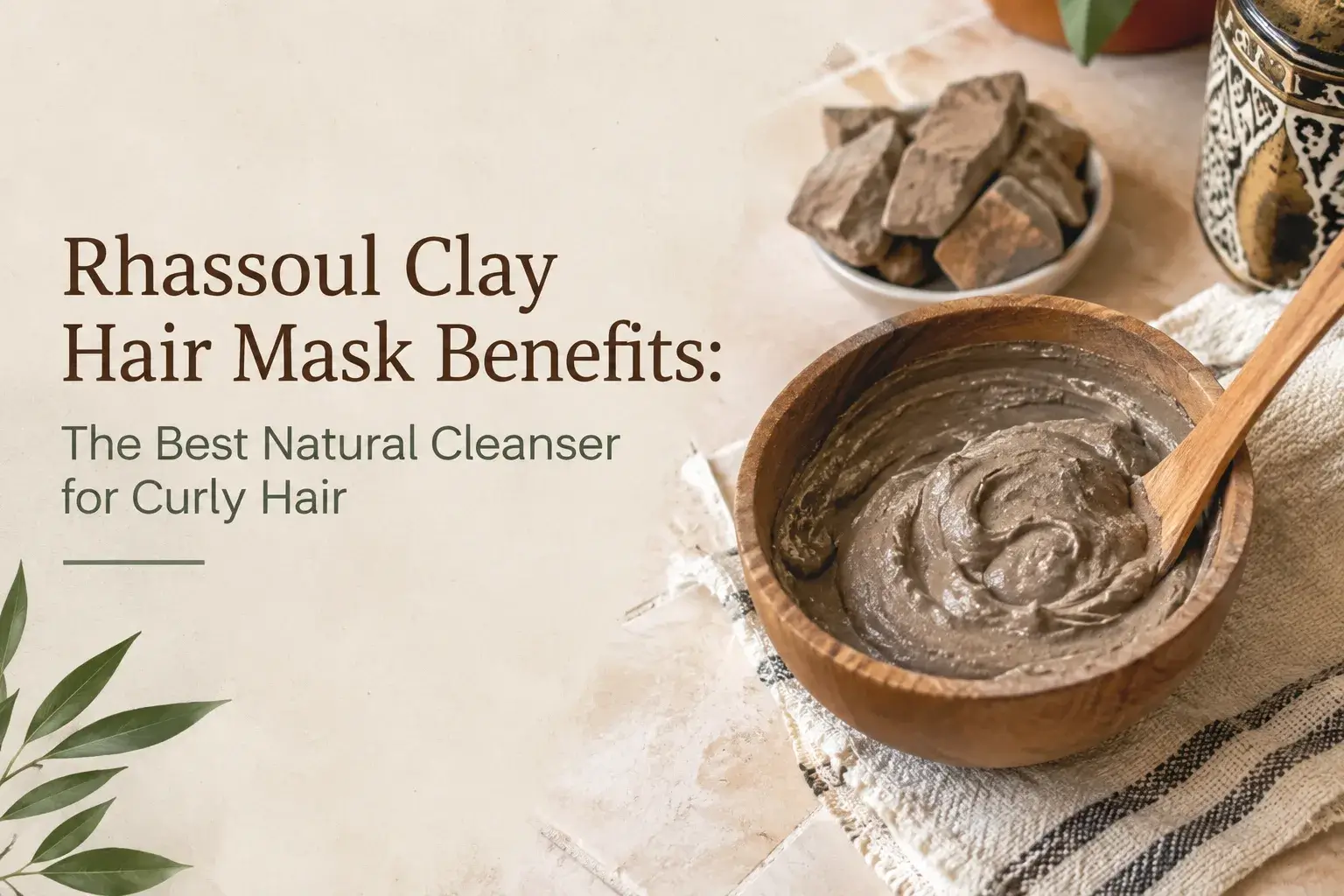
Curly hair is uniquely beautiful, but it requires a delicate balancing act when it comes to cleansing. Because natural scalp oils (sebum) struggle to travel down the twists and turns of a textured hair shaft, curly, coily, and wavy hair types are naturally prone to dryness. Traditional commercial shampoos—often packed with harsh sulfates and synthetic detergents—can strip away these vital natural oils, leaving curls dry, frizzy, and prone to breakage.
Enter Rhassoul clay (also known as Ghassoul clay), an ancient, mineral-rich reddish-brown clay mined exclusively from the Atlas Mountains of Morocco. For centuries, this natural clay has been prized for its incredible ability to cleanse, nourish, and condition hair without stripping away its natural moisture balance. Today, textured hair communities worldwide celebrate the Rhassoul clay hair mask as the ultimate natural detox and cleanser for curly hair.
In this comprehensive guide, we will explore why Rhassoul clay works so exceptionally well for textured hair, the mineral science behind its cleansing action, step-by-step hair mask recipes, and best practices to transform your natural curl routine.
What Is Rhassoul Clay?
The word Rhassoul (or Ghassoul) derives from the Arabic verb Rassala, which translates to "to wash." Formed over millions of years through natural geothermal activity and volcanic deposits in northern Morocco, Rhassoul clay is a 100% natural mineral clay composed mainly of stevensite, magnesium, silica, potassium, and calcium.
Unlike standard drying clays like Bentonite or Kaolin, Rhassoul clay possesses a unique negative electromagnetic charge. When hydrated with water or botanical hydrosols, it acts like a natural magnet—attracting positively charged toxins, heavy metal residues, excess sebum, and product buildup from the hair and scalp. It absorbs impurities while simultaneously exchanging beneficial minerals back into the hair cuticle.
Why Rhassoul Clay Is Ideal for Curly Hair
Curly hair thrives on moisture and gentle care. Clarifying curly hair with standard clarifying shampoos often leads to severe moisture loss, cuticle lifting, and severe tangling. A Rhassoul clay hair treatment provides deep clarification while maintaining hair elasticity and softness. Here is how Rhassoul clay specifically benefits textured hair:
1. Gentle Clarification Without Stripping Moisture
Most clarifying products rely on harsh surfactants (like Sodium Lauryl Sulfate) to dissolve product buildup from hair gels, leave-in conditioners, and oils. Rhassoul clay cleanses physically rather than chemically. It lifts surface dirt and excess oil while preserving the natural lipid barrier of your strands. The result is thoroughly clean hair that still feels soft and hydrated.
2. Natural Curl Definition and Elasticity
One of the most immediate benefits noticed by curly-haired individuals after a clay wash is enhanced curl pattern definition. By removing heavy silicone and mineral buildup that weighs strands down, Rhassoul clay restores your hair’s natural weight and coil structure. The rich silica content helps fortify hair strands, improving elasticity and curl bounce.
3. Superior Detangling and Frizz Reduction
When properly mixed into a smooth paste, Rhassoul clay provides surprising slip. As it smooths down raised hair cuticles, it makes detangling significantly easier during the wash process. By smoothing the cuticle layer, it also prevents atmospheric moisture from entering the hair shaft, drastically reducing post-wash frizz.
4. Soothes the Scalp and Balances Sebum
A healthy scalp is the foundation for healthy hair growth. Rhassoul clay contains high concentrations of magnesium and calcium, minerals known to help soothe irritated, itchy, or flaky scalps. It absorbs excess sebum without causing the scalp to overproduce oil in response, helping to maintain long-term scalp equilibrium.
5. Adds Natural Volume and Shine
Fine or low-density curls can easily become weighed down by traditional heavy deep conditioners. Rhassoul clay expands the natural hair body without leaving behind heavy residue, leaving curls light, voluminous, and naturally shiny.
Rhassoul Clay Mineral Profile Breakdown
To understand why this clay works wonders for hair and skin, take a look at its rich mineral structure:
| Mineral Component | Primary Benefit for Curly Hair |
|---|---|
| Silica (SiO₂) | Strengthens hair strands, improves elasticity, and boosts natural shine. |
| Magnesium (Mg) | Soothes inflamed or dry scalp, supporting healthy hair follicle environment. |
| Potassium (K) | Helps maintain cell hydration and balances scalp moisture levels. |
| Calcium (Ca) | Essential structural mineral that prevents hair fragility and breakage. |
| Iron & Aluminum | Provides structural integrity to the clay’s ionic absorption properties. |
How to Make a DIY Rhassoul Clay Hair Mask for Curls
Creating your own natural clay cleanser at home is simple, budget-friendly, and completely customizable based on your hair’s porosity and moisture needs.
Basic Hydrating Rhassoul Clay Mask Recipe
- 1/2 cup Rhassoul Clay Powder (adjust based on hair length and thickness)
- 3/4 to 1 cup Warm Water or Floral Hydrosol
- 1 tablespoon Pure Argan Oil or Jojoba Oil (for added moisture)
- 1 tablespoon Raw Apple Cider Vinegar or Lemon Juice (optional, to balance pH)
Important Note on Utensils: Never use metal bowls or metal spoons when working with clay. Metal can react with the clay’s natural negative charge, reducing its ionic effectiveness. Always use glass, ceramic, or wooden bowls and plastic or silicone spatulas.
Elevating Your Recipe with Rose Water
Instead of plain water, liquid hydrosols like pure Moroccan rose water significantly enhance the soothing properties of your mask. While many beauty enthusiasts are familiar with the 10 surprising benefits of rose water for your face, its mild astringent and anti-inflammatory qualities work wonders on the scalp as well. Integrating rose water into your hair mask helps hydrate dry curls and calm scalp redness.
Knowing how to use rose water in your routine can easily extend from your skin to your hair. Beyond hair care, if you are curious about facial skincare and whether rose water as a toner minimizes pores, using this gentle botanical hydrator in your clay mix brings double the benefits for both skin and scalp.
Step-by-Step Application Guide for Curly Hair
- Section Your Hair: Divide damp or dry hair into 4 to 6 manageable sections. Sectioning ensures even clay distribution and minimizes tangling.
- Mix the Mask: In a non-metallic bowl, combine the Rhassoul clay with warm water or rose water. Stir until a smooth, yogurt-like consistency is achieved. Add your lightweight oil and mix thoroughly.
- Apply from Roots to Ends: Take one section at a time and apply the clay generously from the scalp down to the ends. Ensure every strand is coated.
- Gently Detangle: Use your fingers or a wide-tooth comb to gently detangle your curls while the smooth clay is in your hair.
- Let It Process: Allow the mask to sit on your hair for 10 to 15 minutes. Do not allow the clay to dry out completely hard on your curls, as completely dry clay can strip excess moisture and cause breakage when rinsing. If it begins to dry too fast, spritz lightly with water or hydrosol.
- Rinse Thoroughly: Rinse your hair with lukewarm water until the water runs completely clear. Take time to masssage your scalp to ensure no clay particles remain.
- Follow Up: Depending on your hair porosity, follow with a lightweight leave-in conditioner or a few drops of pure Moroccan Argan oil to seal in moisture.
Rhassoul Clay vs. Other Natural Hair Cleansers
Natural hair care offers several plant-based and mineral cleansers. Understanding how Rhassoul compares to other options helps you choose the right product for your hair goals.
Rhassoul Clay vs. Bentonite Clay
Bentonite clay has a much higher pH level (around 8 to 9) and a intense swelling capacity. It is exceptionally drying and requires acidic liquids like raw apple cider vinegar to bring its pH down to a safe level for hair. Rhassoul clay, on the other hand, has a lower pH (around 6.9 to 7.5), making it far gentler, more hydrating, and better suited for sensitive scalps and fragile curls.
Rhassoul Clay vs. Natural Soaps
While clarifying botanical soaps exist, learning about cleansing alternatives—like exploring the differences between African black soap vs Moroccan black soap—shows that saponified soaps rely on alkalis that can occasionally leave residue on high-porosity hair. Rhassoul clay cleanses without soap or saponification, offering a purely physical draw of impurities.
For centuries, Rhassoul clay has been used alongside natural black soap routines as an essential step in a traditional Moroccan bath hammam at home, offering total head-to-toe purification.
Common Mistakes to Avoid When Using Rhassoul Clay
- Using Metal Utensils: Always use plastic, glass, or wooden bowls and spoons to maintain the natural ionic charge of the clay.
- Letting the Clay Dry Completely Hard: Allowing clay masks to dry bone-dry on textured hair can lead to hair stiffness and breakage during rinsing. Keep it damp!
- Not Rinsing Thoroughly: Clay residue left behind can feel gritty. Make sure to rinse with plenty of water.
- Using Cold Water: Warm water helps dissolve product buildup and unlocks the smooth texture of the clay much better than cold water.
Scientific Insight on Clay Minerals in Hair Care
According to dermatological and mineralogical research published by the National Center for Biotechnology Information (NCBI), clay minerals possess exceptional adsorption capabilities due to their high specific surface area and cation exchange capacity. These properties allow clays to bind excess scalp lipids and environmental particulates without damaging the structural keratin proteins of the hair shaft.
Frequently Asked Questions (FAQ)
How often should I use a Rhassoul clay hair mask on curly hair?
For most curly hair types, using a Rhassoul clay wash once or twice a month is ideal for clarifying and resetting curls. If you use heavy styling products, gels, or silicones, you can use it every 1 to 2 weeks as a substitute for shampoo.
Can Rhassoul clay replace my regular shampoo?
Yes! Many practitioners of the Curly Girl Method (CGM) use Rhassoul clay as a completely natural, non-foaming shampoo alternative (clay wash) that cleanses and conditions in one step.
Is Rhassoul clay safe for color-treated curly hair?
Rhassoul clay is generally safe for color-treated hair because it does not contain aggressive chemical surfactants. However, because it deeply clarifies, it is recommended to wait at least two weeks after fresh hair dyeing before applying any deep-clarifying mask.
Can I store leftover Rhassoul clay hair mask?
Because homemade clay masks mixed with water or botanical hydrosols do not contain chemical preservatives, any unused mixture should be discarded or stored in the refrigerator for no more than 2 to 3 days. To avoid waste, mix only what you need for a single application.
Conclusion
A Rhassoul clay hair mask is one of nature’s most effective, gentle, and nutrient-dense solutions for curly, coily, and wavy hair. By drawing out buildup, enhancing natural curl structure, and soothing the scalp without stripping vital hydration, this ancient Moroccan secret helps you achieve healthy, vibrant, and defined curls naturally.
Incorporate a Rhassoul clay wash into your monthly self-care ritual to experience clean, refreshed, and effortlessly bouncy curls.