What Is Black Beldi Soap and How Does It Work? Guide
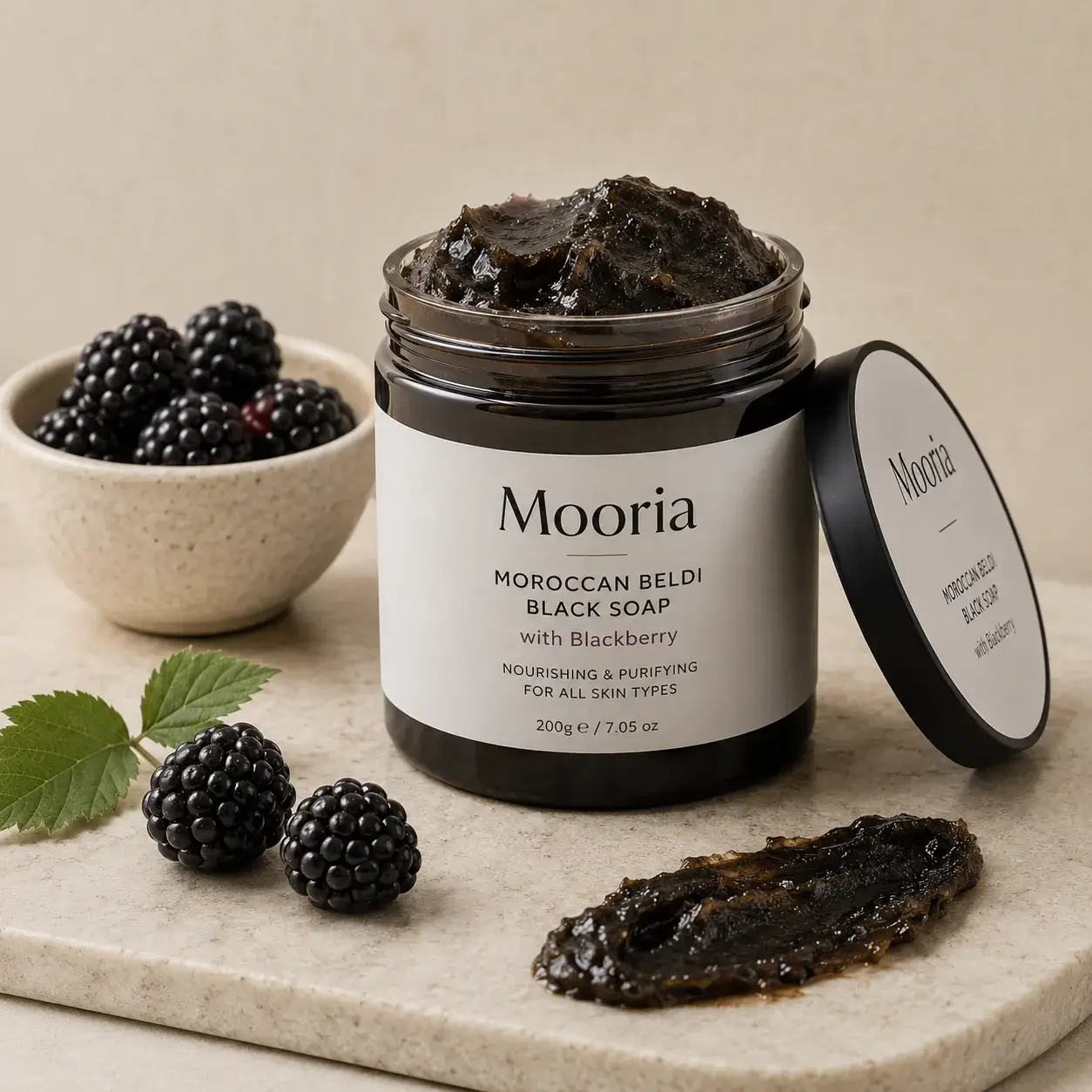
If you have ever explored traditional natural skincare or visited a traditional Moroccan spa, you have likely encountered a dark, gel-like paste known as Black Beldi Soap (often called Savon Noir Beldi in French). Unlike conventional hard bar soaps or foamy liquid body washes, Beldi soap has a unique, velvety texture and a rich, earthy aroma. But what exactly is this centuries-old beauty staple, and how does it manage to transform dull, dry skin into silky-smooth perfection?
Understanding what Moroccan black soap is and its benefits requires looking beyond standard cleansers. Beldi soap is not actually designed for daily cleansing in the modern sense. Instead, it serves as a deeply softening skin treatment that prepares the body for deep exfoliation and cellular renewal. In this comprehensive guide, we will break down what Black Beldi Soap is, how it works at a biochemical level, its key skincare benefits, and how you can integrate this ancient Moroccan ritual into your personal skincare routine.
What Is Black Beldi Soap?
Black Beldi Soap is a traditional Moroccan dark paste soap made primarily from macerated black olives, olive oil, and water, combined with an alkali solution (traditionally potassium hydroxide derived from plant ash) to achieve saponification. The word Beldi is a Moroccan Arabic term meaning "traditional," "local," or "artisanal." Therefore, Beldi soap translates literally to "traditional local soap."
Despite its name, Beldi soap is rarely pitch black. Depending on the exact variety of olives used—green, black, or ripe brown—and the duration of maceration, its color ranges from deep amber and forest green to rich dark brown or charcoal black. Its consistency is smooth, gelatinous, and buttery, making it easily spreadable over warm, wet skin.
The Traditional Origin of Beldi Soap
The roots of Beldi soap trace back centuries to North Africa and the Mediterranean basin, building upon ancient Levantine soap-making methodologies. In Morocco, the soap became the cornerstone of the public bathhouse, or hammam. For generations, men and women alike have gathered at local hammams for weekly purification rituals, using Beldi soap as the essential first step to steam, soften, and cleanse the body.
How Does Black Beldi Soap Work?
To understand why Beldi soap is so effective, it helps to examine how it behaves differently from standard retail soaps and body washes.
1. High Concentration of Olive Fatty Acids
Most commercial bar soaps are made from animal fats or palm oil and use sodium hydroxide (lye), resulting in a hard, solid bar. Black Beldi Soap is crafted using potassium hydroxide and olive-based fatty acids. Olive oil is exceptionally rich in oleic acid, linoleic acid, and vitamin E. When saponified, these vegetable fatty acids create a soap that is naturally soft, viscous, and highly moisturizing.
2. Softening the Stratum Corneum
Unlike harsh exfoliants that rely on abrasive beads, acids, or physical friction to strip the skin, Beldi soap relies on pH and hydration dynamics. When applied to warm, steamed skin, the soap's alkaline structure gently breaks down the surface barrier composed of dead skin cells, sebum, and environmental debris (the outer layer known as the stratum corneum).
The macerated olive pulp acts as a natural humectant and emollient, binding moisture to the dead skin cells. Within 5 to 10 minutes of application, the dry, hardened bonds holding dead skin cells together dissolve, turning the outer layer of skin into a soft, easily removable layer.
3. Preparing the Skin for Mechanical Exfoliation
Beldi soap does not lather heavily like commercial body washes. Instead, it forms a silky film over the skin. Once rinsed away with warm water, the skin surface remains deeply hydrated and softened. This creates the ideal condition for mechanical exfoliation. When paired with a traditional exfoliating mitten, learning how to use a Kessa glove correctly allows you to lift away layers of dead skin without tearing or irritating the fresh, healthy skin underneath.
Key Benefits of Using Black Beldi Soap
Adding authentic Moroccan Beldi soap to your weekly skincare routine offers several noticeable advantages over modern chemical peels or synthetic body scrubs.
1. Deep Exfoliation Without Micro-Tears
Physical scrubs made with crushed walnut shells or coarse salt can leave microscopic tears on the skin surface, leading to inflammation and redness. Beldi soap softens dead skin chemically and thermally before friction is ever applied. This makes the subsequent exfoliation far gentler and more effective.
2. Nutrient-Rich Nourishment
Because Beldi soap is derived from whole olives and pure olive oil, it retains high levels of natural antioxidants, including Vitamin E and polyphenols. These compounds help defend the skin against free radical damage, support skin elasticity, and reinforce the natural moisture barrier.
3. Improves Skin Texture and Unclogs Pores
Regular use of Beldi soap helps prevent keratois pilaris (often called "strawberry skin"), ingrown hairs, and blocked pores on the back, shoulders, and legs. By removing built-up sebum and dead cellular residue, the skin appears smooth, radiant, and refreshed.
4. Enhances Absorption of Subsequent Skincare Products
When a thick layer of dead cells sits on the surface of your body, body oils, lotions, and creams cannot penetrate effectively. By deeply purifying the skin with Beldi soap, your post-shower moisturizers—such as pure Argan oil or body lotions—absorb much faster and work significantly better.
How to Use Black Beldi Soap at Home: Step-by-Step Guide
You do not need a public hammam to experience the benefits of Beldi soap. Following a straightforward guide to Moroccan hammam steps at home allows you to replicate this luxurious ritual in your own bathroom.
- Step 1: Create Steam and Warmth. Take a warm shower or bath for 10 to 15 minutes. The warm water and steam are essential because they open your pores and soften your skin barrier.
- Step 2: Apply the Beldi Soap. Take a small scoop (about a tablespoon) of Beldi soap and smooth it evenly across your warm, wet skin. Avoid applying it to your face, delicate eye areas, or freshly shaved skin.
- Step 3: Allow It to Rest. Leave the soap on your skin for 5 to 10 minutes. Relax in the steam while the olive oil and natural alkalis loosen dead skin cells.
- Step 4: Rinse Thoroughly. Rinse off every trace of the soap using warm water. The skin should feel smooth and slightly slick, but clean.
- Step 5: Exfoliate with a Kessa Glove. Dampen your Kessa glove with warm water (do not use soap on the glove). Using firm, sweeping upward and downward strokes, rub your skin. You will quickly see dead skin roll off in small dark threads.
- Step 6: Final Rinse and Hydration. Rinse your body completely with cool or lukewarm water to close the pores. Finish by applying a nourishing body oil, such as cold-pressed Argan oil, or follow up with a body mask like clay. Exploring Rhassoul clay benefits for skin shows how combining clay with Beldi soap provides an unbeatable spa-level detoxification treatment.
What Ingredients Should You Look For?
Authentic Black Beldi Soap relies on simplicity. High-quality traditional soap should contain very few ingredients. When evaluating formulations, look for:
| Ingredient | Function & Purpose |
|---|---|
| Olea Europaea (Olive) Fruit Oil & Olive Paste | Provides essential fatty acids, vitamins, and the natural moisturizing gel base. |
| Water (Aqua) | Serves as the solvent for saponification and texture adjustment. |
| Potassium Hydroxide | The saponifying agent required to turn vegetable oil into soft soap. (None remains in the final product after saponification). |
| Eucalyptus Leaf Oil (Optional) | Frequently added for an invigorating scent, antibacterial properties, and respiratory clarity in steam. |
Avoid products that contain synthetic fragrances, artificial colorants, parabens, or sulfates (SLS/SLES). Authentic Beldi soap naturally smells earthy, slightly salty, and rich in olive tones. If you want to curate a full self-care routine, choosing the best Moroccan hammam set for home ensures you receive genuine, unadulterated Beldi soap alongside an authentic Kessa mitten.
Who Should (and Shouldn't) Use Beldi Soap?
Beldi soap is suitable for almost all skin types, including dry, oily, combination, and mature skin. However, because of its unique properties, keep the following guidelines in mind:
- Ideal For: Rough skin texture, dry elbows and knees, keratosis pilaris, skin prone to ingrown hairs, and general dullness.
- Frequency: Use Beldi soap once a week or once every two weeks. Because it provides deep exfoliation, using it daily can strip the skin's protective lipid barrier.
- Sensitive Skin Precautions: If you have active eczema, psoriasis flare-ups, sunburn, or open wounds, avoid using Beldi soap or vigorous exfoliation until the skin heals. Always perform a patch test if you have hyper-reactive skin.
- Facial Use: It is generally recommended to keep traditional Beldi soap on the body. Facial skin is significantly thinner and more sensitive than body skin, making high-pH soaps and aggressive Kessa friction too intense for the face.
Common Mistakes to Avoid
To get the best results from your Beldi soap treatment, avoid these common errors:
- Using it on dry, unsteamed skin: The soap needs heat and moisture to effectively penetrate and soften dead cellular build-up.
- Leaving soap on while using the Kessa glove: Always rinse the soap off completely before scrubbing. If soap remains on the skin, the glove will slide too easily and fail to grip the dead skin cells.
- Over-scrubbing: Do not scrub until your skin turns red or inflamed. Gentle, firm pressure with a damp glove is all that is required.
- Applying daily: Deep exfoliation should be treated as a weekly treatment, not a daily habit.
Frequently Asked Questions
Is Black Beldi Soap the same as African Black Soap?
No, they are distinct products. Moroccan Black Beldi Soap is a gelatinous paste made from macerated olives, olive oil, and potassium hydroxide. African Black Soap (typically originating from West Africa) is a hard, crumbly bar soap made from cocoa pod ash, palm kernel oil, and shea butter. Both are excellent natural cleansers, but Beldi soap is designed specifically for steam softening and hammam exfoliation.
Why isn't my Beldi soap foaming?
Beldi soap is formulated without synthetic foaming agents (like sodium lauryl sulfate) or heavy sodium salts. It produces a creamy, slick glaze rather than big soapy bubbles. This low-foam, high-emollient property is precisely what enables it to soften skin without stripping moisture.
How should I store Black Beldi Soap?
Keep your jar of Beldi soap sealed tightly in a cool, dry place away from direct water splashes. Because it contains vegetable oils and natural ingredients, preventing excess water from entering the tub helps maintain its consistency and shelf life.
Can I use Beldi soap without a Kessa glove?
Yes. Even without a Kessa glove, Beldi soap functions as a highly hydrating, skin-softening body wash. However, using it alongside an exfoliating glove unlocks its primary benefit: deep, effortless dead skin removal.
Conclusion
Black Beldi Soap is far more than a simple cleansing product; it is a time-tested skin therapy that combines rich botanical nutrition with intelligent mechanical exfoliation. By harnessing the natural power of olive oil and steam, Beldi soap softens the skin, removes impactions, and reveals a velvety, glowing layer underneath. When integrated into your weekly self-care routine, this ancient Moroccan ritual provides an unmatched spa-quality transformation right in your home bathroom.