How to Use a Kessa Glove for Smooth, Glowing Skin
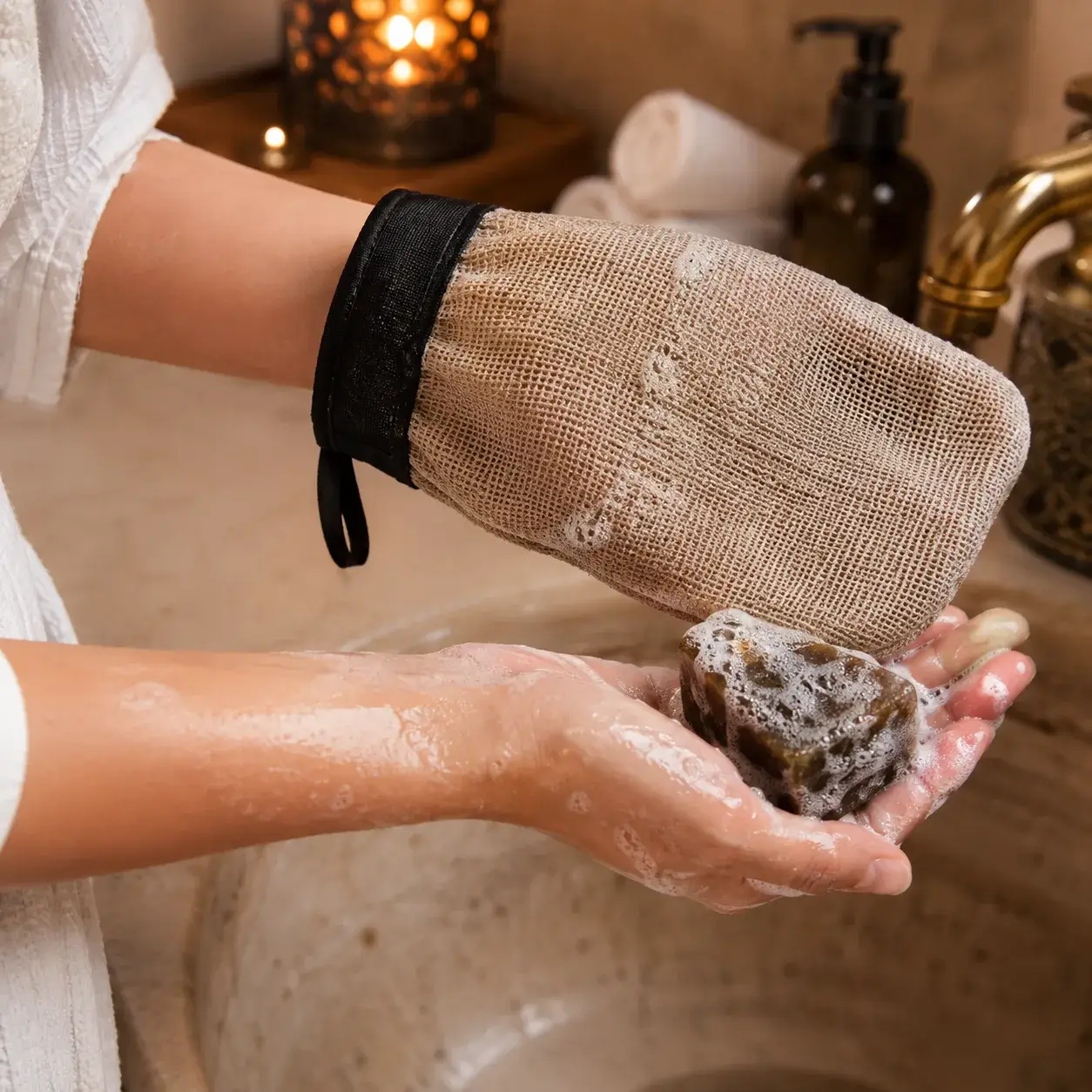
Unlocking radiant Skin with the Moroccan Kessa Glove
Achieving soft, velvety, and naturally radiant skin doesn't always require expensive chemical peels or complex multi-step clinical treatments. For centuries, one of the most effective secrets to deep skin rejuvenation has lived within the traditional bathhouse culture of North Africa: the Kessa glove (also known as a kess or kesse).
Unlike synthetic loofahs or plastic shower poufs that merely swirl soap around your body, a genuine Kessa glove features a unique micro-grain crepe texture engineered specifically to lift away layers of dead skin, dirt, and trapped sebum. When used correctly alongside warm water and traditional steam, it causes dead skin cells to literally roll off your body in visible rolls, leaving behind extraordinarily smooth and glowing skin.
In this definitive guide, you will learn what makes the Kessa glove so unique, the exact step-by-step method to use it safely at home, common mistakes to avoid, and how to maintain your glove for optimal hygiene and performance.
What Is a Kessa Glove?
A Kessa glove is a traditional exfoliating mitten deeply rooted in Middle Eastern and North African bathing culture. Crafted typically from woven viscose rayon, coarse silk, or textured crepe fabric, the mitten's surface possesses microscopic grooves designed to catch and peel away keratinized, dull skin without tearing or lacerating healthy surface tissue.
| Feature | Traditional Kessa Glove | Standard Synthetic Loofah | Sugar/Salt Body Scrubs |
|---|---|---|---|
| Exfoliating Mechanism | Mechanical friction via creped weave | Mild surface friction | Abrasive granules (sugar/salt/seeds) |
| Deep Cleansing Level | High (removes visible dead skin rolls) | Low to Moderate (daily surface bath) | Moderate (surface smoothing) |
| Chemical/Fragrance Risk | Zero (chemical-free textile) | Zero (synthetic mesh) | Variable (often contains synthetic oils & scents) |
| Reusability & Longevity | High (durable fabric, lasts months) | Low (harbors bacteria quickly) | Single-use product jar |
The Science and Benefits of Kessa Exfoliation
Exfoliation is essential for maintaining a healthy epidermal barrier. As we age, our natural cell turnover slows down, leading to a accumulation of dead skin cells that cause skin to appear dull, rough, or uneven. Mechanical exfoliation using a Kessa glove offers several key skin health benefits:
- Lifts Dead Cell Accumulation: By manually rolling off dead skin, the Kessa immediately improves surface texture, softeness, and luminosity.
- Prevents and Unclogs Ingrown Hairs: Regular use helps clear follicle openings, preventing hairs from curling back into the skin—making it ideal prior to shaving or waxing.
- Smoothes Keratosis Pilaris (Strawberry Legs): Gentle mechanical sloughing helps smooth the dry, bumpy keratin plugs often found on the backs of arms and thighs.
- Stimulates Microcirculation and Lymphatic Drainage: The firm massage motion encourages blood flow to the skin's surface, delivering vital nutrients and giving the body a refreshed appearance.
- Enhances Moisture Absorption: Removing the barrier of dead skin enables body oils, lotions, and creams to penetrate far more deeply and effectively.
According to clinical research published by the National Institutes of Health (NIH), gentle physical exfoliation supports stratum corneum renewal, aiding skin barrier function when paired with immediate post-bath hydration.
Step-by-Step Guide: How to Use a Kessa Glove at Home
To experience true bathhouse-quality results, the setup and sequence are critical. The secret to getting dead skin to visible roll off lies in proper preparation: heat, moisture, and soap removal. If you want to dive deeper into the complete traditional ritual, read our complete Moroccan hammam routine at home guide.
Step 1: Soften Your Skin with Warm Steam
Before bringing the glove anywhere near your skin, you must thoroughly soften the outer epidermal layer. Turn your shower to a comfortable, hot temperature to build steam in the room. Soak yourself under warm water for at least 10 to 15 minutes. Do not scrub or use body washes yet—simply allow the water vapor to loosen clogged pores and soften dry keratin.
Step 2: Apply Moroccan Black Soap (Sabon Beldi)
Once your skin is thoroughly warm and damp, turn off the water. Take a small lump of traditional Moroccan Black Soap—a gel-like paste made from saponified olive oil and crushed black olives—and rub it evenly over your body. Leave this rich soap on your skin for 5 to 10 minutes. The high fatty-acid content acts as an enzyme-like softening mask, breaking down the bonds between dead skin cells.
For a detailed breakdown of the complete bath steps, consult our comprehensive guide to Moroccan hammam steps at home.
Step 3: Rinse Thoroughly (The Most Important Secret)
Here is where most beginners make a mistake: you must rinse off all black soap completely before scrubbing. If any soap residue remains on your skin, the Kessa glove will simply glide over your body without creating the necessary friction required to lift dead skin. Rinse with warm water until your skin feels squeaky clean and slightly "tacky."
Step 4: Scrub with the Damp Kessa Glove
Wet your Kessa glove with warm water and squeeze out any excess moisture. Place your hand inside. Working section by section (such as your forearms, legs, or chest), apply firm, long, linear strokes back and forth. Avoid circular motions, as back-and-forth strokes provide optimal grip on dead skin cells.
Within a few passes, you will notice greyish-white rolls of dead skin peeling off easily. Do not scrub excessively in one spot to avoid raw skin or irritation. To learn how to execute this full technique seamlessly in your own bathroom, check our how to do a Moroccan bath at home step-by-step guide.
Step 5: Rinse and Purify
Rinse away all the sloughed-off skin rolls with cool or lukewarm water. This helps calm the skin and close pores. For an elevated experience, you can follow exfoliation with a mineral-rich clay treatment; discover how Rhassoul clay fights acne and balances oily body skin when applied post-scrub.
Step 6: Nourish and Lock in Moisture
Pat your skin dry gently with a clean towel. Because your pores are freshly unblocked and exfoliated, your skin is ready to absorb nutrients. Apply a generous layer of pure Moroccan Argan Oil or a rich natural body butter while your skin is still slightly damp to lock in deep hydration.
Essential Rules & Common Mistakes to Avoid
While Kessa glove exfoliation is safe for most skin types, improper technique can cause over-exfoliation or micro-irritation. Keep the following guidelines in mind:
- Never scrub with soap on the skin: As mentioned, soap acts as a lubricant and cancels out friction. Always rinse soap off fully before using the glove.
- Limit frequency: Use your Kessa glove once a week (or once every two weeks for sensitive skin). Over-exfoliating can disrupt your natural lipid barrier, as cautioned by dermatological experts at the American Academy of Dermatology (AAD).
- Avoid facial areas and irritated skin: The body Kessa glove is too abrasive for delicate facial skin. Never use it over active sunburns, open wounds, eczema flare-ups, or fresh hair-removal areas.
- Do not apply extreme pressure: Let the fabric's micro-weave do the work. Pressing too hard will irritate the skin rather than yield more exfoliation.
How to Choose and Care for Your Kessa Glove
When selecting your tools, quality matters. When building your bathroom routine, choosing authentic materials makes all the difference; explore our guide on the best Moroccan hammam set for home to ensure you select high-grade textiles and pure botanical soaps.
Cleaning and Storage Instructions
- Rinse thoroughly: After each use, wash the glove thoroughly under hot running water with mild antibacterial soap to remove trapped skin particles.
- Air dry completely: Hang the glove by its loop in a dry, well-ventilated space. Avoid leaving it damp inside a humid shower, which invites bacterial growth.
- Do not machine wash with softeners: Fabric softeners coat the crepe fibers, destroying their friction capabilities.
- Replace regularly: Replace your Kessa glove every 3 to 4 months for hygienic reasons and to maintain crisp exfoliating texture.
Frequently Asked Questions
Why isn't my skin rolling off with the Kessa glove?
If skin isn't rolling off, it usually means your skin was not steamed long enough, you didn't rinse off all soap completely, or your skin is already well-exfoliated. Ensure you steam for at least 10 minutes and completely rinse away all oils and soaps before scrubbing.
Can I use a Kessa glove on my face?
It is generally not recommended to use a standard body Kessa glove on the face, as facial skin is significantly thinner and more sensitive. Use a specially designated, ultra-fine facial Kessa or a gentle enzymatic exfoliant instead.
How often should I use a Kessa glove?
Once a week is ideal for normal to dry body skin. If you have sensitive skin, once every 10 to 14 days is sufficient to keep skin smooth without causing redness or compromise to your skin barrier.
Can I use regular shower gel instead of Moroccan Black Soap?
While you can soften skin with warm water alone, traditional Moroccan Black Soap significantly aids the process. Its olive oil base and high alkalinity break down dead skin surface bonds, making exfoliation dramatically more effective than regular body washes.
Conclusion
Incorporating a Kessa glove into your weekly body care routine is a simple, natural, and highly rewarding way to maintain smooth, radiant skin. By combining proper steam preparation, natural botanical black soap, and gentle back-and-forth friction, you can effortlessly shed dead skin cells and reveal a fresh, glowing complexion right from home.