The Complete Moroccan Hammam Routine at Home: A Step-by-Step Guide
For centuries, the traditional Moroccan hammam has served as a cornerstone of social life, deep cleansing, and holistic wellness. Rooted in ancient bathing traditions, this steam-based bath ritual goes beyond basic hygiene—it is an invigorating, sensory experience designed to detoxify the skin, improve circulation, and deeply relax the body. While visiting a traditional communal bathhouse in Marrakech or Fez offers an unforgettable cultural experience, you do not need to travel to North Africa to enjoy its transformative benefits.
With a few essential natural ingredients and proper preparation, you can recreate an authentic Moroccan hammam routine at home. This step-by-step guide walks you through the traditional ritual, explaining how each element works, how to prepare your space, and how to care for your skin for a radiant, silky-smooth finish.
What Is a Traditional Moroccan Hammam?
A hammam is a public bathhouse where people gather to bathe, socialize, and unwind. Unlike modern dry saunas, a traditional hammam relies on high humidity and steam to soften the skin and open pores. The core philosophy of the hammam centers on gentle warmth, mechanical exfoliation, and the application of nutrient-rich plant ingredients harvested across Morocco, such as olive oil soap, volcanic clay, and argan oil.
Integrating these ancient practices into your modern skincare regimen offers a powerful antidote to urban pollution, dead skin accumulation, and physical tension. As interest in timeless Moroccan beauty rituals grows worldwide, learning the precise sequence allows you to maximize the benefits in the comfort of your own bathroom.
Essential Tools & Ingredients You Will Need
Before beginning your home steam ritual, collect all the necessary tools and natural botanicals. Having everything ready allows you to maintain a relaxed, uninterrupted state throughout the bath.
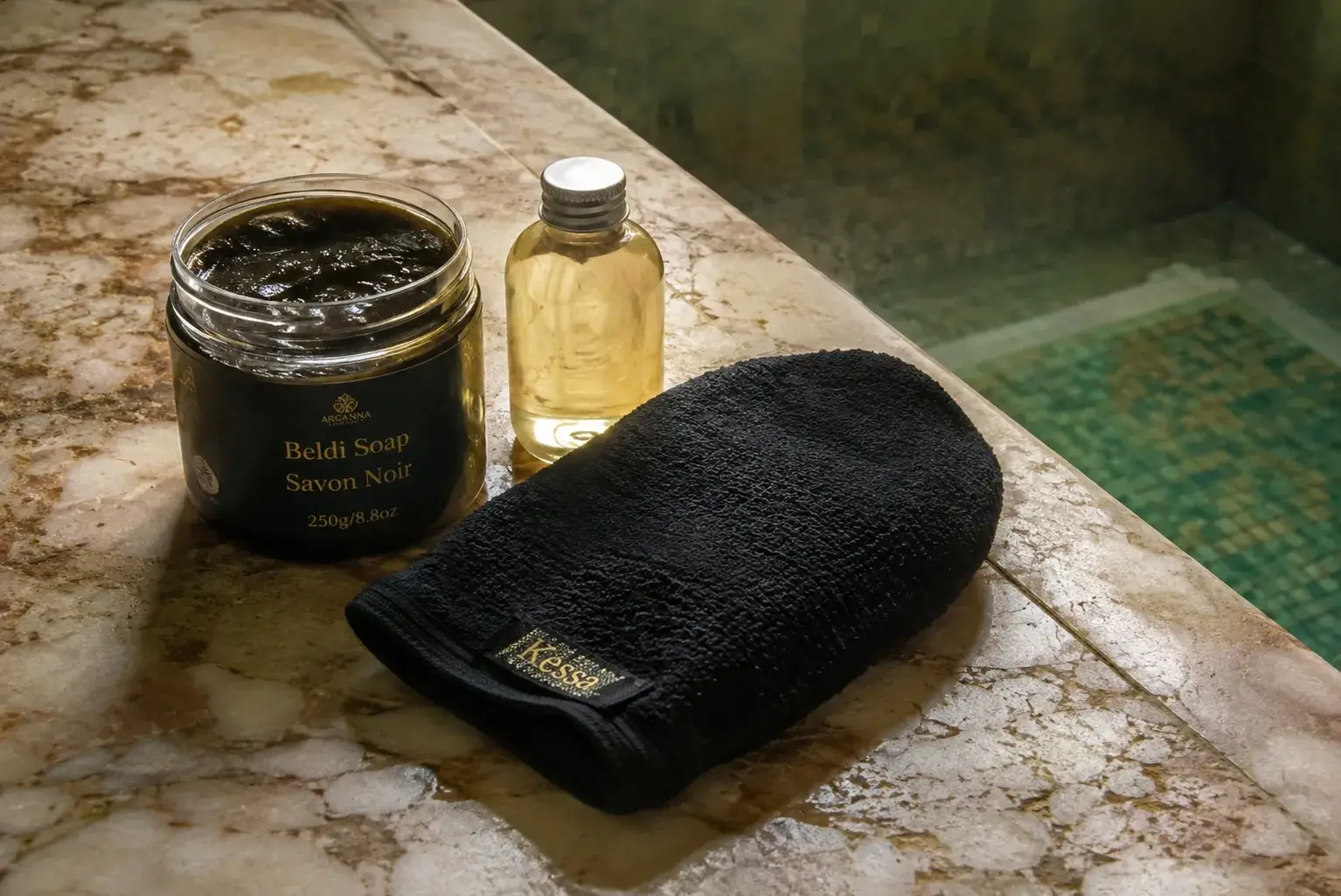
- Moroccan Black Soap (Savon Noir): A dark, gel-like soap made from saponified olive oil and macerated black olives, rich in Vitamin E.
- Exfoliating Kessa Glove: A specialized textured crepe glove designed to sweep away softened dead skin without scratching.
- Ghassoul (Rhassoul) Clay: A mineral-dense volcanic clay mined from Morocco’s Atlas Mountains, used as a body and face mask.
- Organic Moroccan Argan Oil: Pure, cold-pressed oil loaded with essential fatty acids to lock in moisture after exfoliation.
- Pure Rose Water or Orange Blossom Hydrosol: Used to clarify, balance, and cool the skin.
- Warm Water & Laving Bowls: For rinsing gently throughout the routine.
If you are looking to assemble these items, reviewing a guide on selecting the best hammam set for home use will help you choose authentic, high-purity ingredients.
Step 1: Recreate the Hammam Steam Environment
The magic of the hammam relies heavily on heat and moisture. In a traditional setting, bathers move through a series of progressively warmer rooms to gradually acclimatize and promote sweat.
To replicate this environment at home:
- Close all bathroom doors, windows, and ventilation fans to seal in humidity.
- Turn your shower to its highest temperature and let hot water run for 10 to 15 minutes to fill the room with dense steam.
- If available, light natural herbal candles or use eucalyptus oil vapor to create a calming ambiance.
- Lower the light level to encourage nervous system relaxation.
Step 2: Warm the Body and Soften the Skin
Sit comfortably in your steamy bathroom for 10 to 15 minutes before applying any products. Step into a warm shower or soak in a hot tub to fully drench your skin from head to toe.
This phase is critical: heat expands the pores and softens the outermost layer of dead skin cells (the stratum corneum). Attempting to exfoliate dry or cold skin will cause micro-tears and redness rather than clean shedding.
Step 3: Apply Moroccan Black Soap (Savon Noir)
Once your body is warmed and dripping wet, turn off the water stream.
- Take a generous scoop of black soap (about two tablespoons) and rub it between your palms. It will transform into a light, creamy paste.
- Smooth the soap thoroughly over your warm skin, moving from your shoulders down to your feet. Avoid direct contact with eyes and sensitive mucous membranes.
- Allow the soap to sit on your skin for 5 to 10 minutes.
Unlike normal cleansing soaps, Savon Noir does not create a heavy lather. Instead, its high concentration of olive oil and natural alkaline properties acts as an enzymatic softener, loosening dead skin cells and preparing them for easy physical removal.
Step 4: Rinsing and The Kessa Exfoliation Ritual
This is the central step of the entire routine. Rinse off all traces of the black soap completely using warm water. Your skin should feel thoroughly damp and slightly tacky, but free of soap residual.
- Soak your Kessa glove in warm water and squeeze out any excess moisture. Do not apply soap directly to the glove.
- Working on damp (not under running water) skin, apply firm, long, linear strokes with the glove. Start at your extremities—arms and legs—and move toward your torso.
- As you stroke back and forth, you will notice dark, roll-like rolls of dead skin and debris peeling off effortlessly.
- Adjust pressure according to sensitivity: apply moderate pressure on limbs, knees, and elbows, and lighter pressure on the neck and chest.
According to clinical studies on skin barrier restoration published by global dermatology research bodies, controlled mechanical exfoliation removes non-viable surface keratinocytes, boosting cellular renewal and promoting improved skin texture.
Step 5: Purify with a Ghassoul Clay Mask
After rinsing away the exfoliated skin particles, your fresh skin is ideally prepared to absorb mineral nutrients. Ghassoul (also known as Rhassoul) clay is rich in silica, magnesium, potassium, and calcium.
- Mix Ghassoul powder with warm water or rose water in a non-metallic bowl until it forms a smooth, brushable mud paste.
- Apply an even layer over your damp body and face.
- Leave the mask on for 8 to 12 minutes, keeping it slightly moist (do not let it crack completely).
- Rinse thoroughly with lukewarm water.
Ghassoul clay is celebrated for its high cation-exchange capacity, which allows it to pull impurities out of clogged pores without stripping essential surface lipids. Beyond body care, research into clay minerals reveals that Rhassoul clay fights acne by balancing excess sebum levels and reducing surface bacteria.
Step 6: Cool, Hydrate, and Nourish
End the warm portion of your ritual by rinsing your body with cooler water. This helps restore body temperature, close pores, and tone the skin.
- Mist pure organic rose water across your face and neck to calm inflammation and balance skin pH.
- While skin remains slightly damp, massage pure cold-pressed Moroccan Argan oil into your entire body.
Argan oil acts as an occlusive barrier that seals hydration into newly exfoliated skin cells, delivering vitamin E and essential omega fatty acids that repair the lipid barrier. Due to its soothing properties, modern botanical formulators frequently reference these ingredients when formulating natural deodorizing skincare with Moroccan botanicals.
Key Differences: Hammam vs. Standard Exfoliation
| Feature | Standard Body Scrub | Moroccan Hammam Routine |
|---|---|---|
| Preparation | Quick application in a normal shower. | 15-minute steam soak to open pores and soften keratin. |
| Cleansing Base | Synthetic cleansers or sugar/salt granules. | Enzymatic olive-based Moroccan Black Soap. |
| Exfoliation Tool | Loofah, plastic mesh, or harsh scrub particles. | High-precision woven crepe Kessa glove. |
| Post-Care | Standard body lotion. | Purifying volcanic clay mask + pure Argan oil nourishment. |
Common Home Hammam Mistakes to Avoid
To enjoy the maximum benefit of this ritual without triggering skin irritation, keep the following guidelines in mind:
- Exfoliating while soap is still on the skin: Always rinse off Savon Noir before using the Kessa glove. The soap makes the skin too slippery for the glove's texture to grab dead skin cells.
- Scrubbing too aggressively: The Kessa glove is effective without excessive force. Let the crepe texture do the work to prevent skin rawing or erythema.
- Over-exfoliating frequency: Because the hammam provides deep exfoliation, it should only be performed once every 7 to 14 days. Daily or bi-weekly use can compromise the protective skin barrier.
- Skipping post-hydration: Freshly exfoliated skin loses moisture quickly (transepidermal water loss). Applying argan oil within 3 minutes of drying off is essential.
The Wellness Benefits Beyond Skincare
While the physical skin smoothing benefits are obvious, the psychological impact of the hammam is equally significant. Spending 45 to 60 minutes off screens, immersed in warmth and tactile self-care, lowers cortisol levels and calms the autonomic nervous system. Recognizing these restorative qualities, many modern wellness destinations and spas are switching to organic wholesale product suppliers to bring traditional hammam services to a broader audience.
Frequently Asked Questions
How often should I perform a Moroccan hammam routine at home?
For best results, perform the complete ritual once a week or once every two weeks. This matches the skin’s natural 28-day cellular turnover cycle and prevents over-exfoliation.
Can I use a regular washcloth instead of a Kessa glove?
While a standard cotton washcloth can gently clean the skin, it lacks the specialized viscose or silk-crepe weave required to peel away softened dead skin buildup effectively. A genuine Kessa glove is essential for true hammam exfoliation.
Is the Moroccan hammam routine safe for sensitive skin?
Yes, provided you adjust your technique. Sensitive skin types should reduce the time Savon Noir sits on the skin to 3–5 minutes and use gentle, light strokes with the Kessa glove. Avoid scrubbing active sunburns, open wounds, or severe eczema flare-ups.
Can I use this routine on my face?
You can apply Savon Noir, Ghassoul clay, rose water, and argan oil to your face. However, do not scrub your face with the heavy body Kessa glove, as facial skin is significantly thinner. Use a delicate facial cloth or mild facial exfoliator instead.
Conclusion
Recreating a Moroccan hammam routine at home transforms a routine bath into a deeply restorative ritual for mind and body. By combining warmth, nutrient-dense olive soap, precise manual exfoliation, mineral clay, and pure argan oil, you clear away impurities and reveal smooth, glowing skin. Set aside one evening a week to slow down, embrace the steam, and experience one of the world's oldest and most effective self-care traditions right in your own home.