Formulating Natural Deodorants: Moroccan Botanical Export Guide
Executive Summary: Commercializing Botanical Body Deodorization Strategies
The global personal care market is witnessing an unprecedented shift away from synthetic antiperspirants containing aluminum chlorohydrate, parabens, and synthetic fragrances toward clean-label, bio-based odor control systems. International cosmetics brand directors, procurement managers, and spa networks are actively seeking natural formulations that inhibit odor-causing bacteria without disrupting the cutaneous microbiome or occluding sweat glands.
Morocco’s centuries-old bathing and purification rituals offer an unparalleled formulation blueprint for modern clean-label skincare. By synthesizing traditional bio-actives—such as natural potassium alum minerals, cold-pressed botanical extractions, saponified olive matrixes, and mineral clays—with modern cosmetic science, contract manufacturers can deliver high-efficacy deodorizing product lines. This B2B guide analyzes the technical mechanics, botanical raw materials, regulatory frameworks, and OEM manufacturing solutions required to formulate and export commercial-grade natural body care collections rooted in authentic Moroccan traditions.
Market Context & Demand Drivers for Clean-Label Odor Control
Consumer preferences in Europe, North America, and the Asia-Pacific region have transformed body care standards. Dermocosmetic brands are forced to re-engineer personal hygiene portfolios due to growing regulatory scrutiny on synthetic chemical inputs and rising consumer awareness regarding skin absorption. Key market drivers include:
- Microbiome Preservation: Traditional antiperspirants rely on aluminum salts to plug eccrine sweat ducts, disrupting normal physiological thermoregulation and skin microflora. Natural alternatives focus on neutralizing odor-causing bacteria (such as Corynebacterium and Staphylococcus epidermidis) while allowing natural perspiration.
- Regulatory Modernization: Aligning with European Commission CosIng standards and US FDA Cosmetic Directives requires clean-label compliance, full traceability, and rigorous safety assessments.
- Spa & Wellness Integration: Luxury resort groups and wellness facilities are increasingly seeking organic body care solutions. Industry analysis shows spas switching to organic wholesale product suppliers to meet high customer expectations for purity and authenticity.
Technical Deep-Dive: Core Moroccan Botanicals & Actives for Natural Deodorization
To engineer a commercially viable, natural deodorizing line, formulation chemists must select raw materials that provide antimicrobial protection, sebum regulation, enzymatic odor suppression, and dermal barrier repair. Modern formulations draw heavily from timeless Moroccan beauty rituals inspiring modern brands across global markets.
1. Potassium Alum (Natural Mineral Salt) vs. Synthetic Aluminum Chlorohydrate
Natural potassium alum (potassium aluminum sulfate) is a naturally occurring mineral crystal used for centuries across North Africa. Unlike synthetic aluminum chlorohydrate or aluminum zirconium—which possess small molecular structures that penetrate dermal layers and block sweat pores—potassium alum features a large molecular structure. It remains on the surface of the skin, creating an invisible, non-clogging antimicrobial barrier that prevents the breakdown of sweat by bacteria, thereby stopping odor formation at its source.
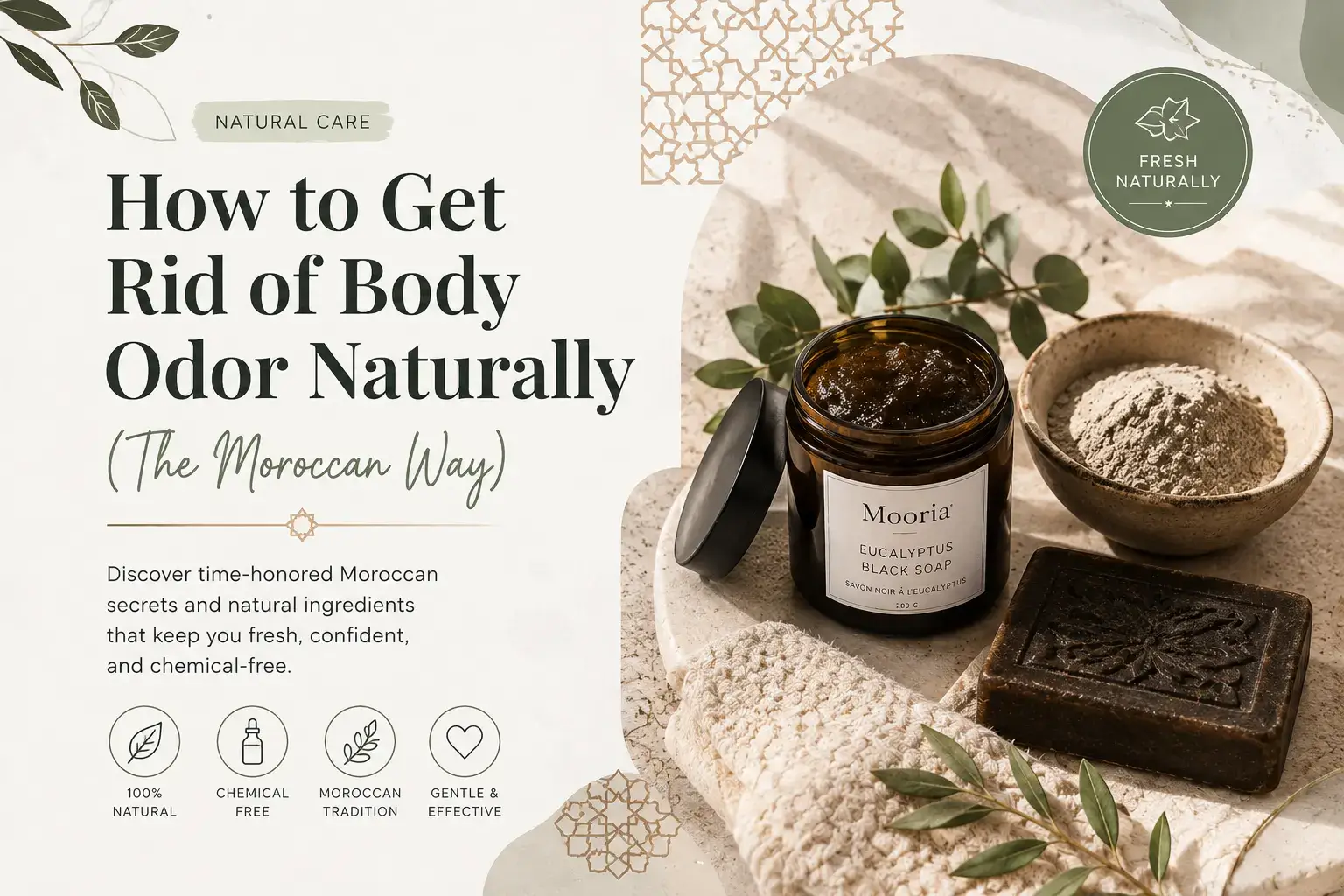
2. Saponified Black Soap (Savon Noir) with Eucalyptus Globulus
The foundation of the classic Moroccan hammam ritual relies on Savon Noir, an alkaline paste formulated from saponified olive oil (pulp and oil) enriched with essential oils. Eucalyptus Globulus provides natural cineole content, offering proven antibacterial and antiseptic properties that cleanse deep within follicular pores to remove persistent lipid deposits where odor bacteria thrive. Exploring the technical secrets of Moroccan hammam organic skincare rituals provides actionable insights into how these traditional paste soaps act as highly efficient pre-deodorizing treatments.
3. Rhassoul Clay (Stevensite Matrix) for Enzymatic & Lipid Adsorption
Mined exclusively from ancient tertiary deposits in Morocco’s Moulouya Valley, Rhassoul (Ghassoul) clay is a smectite clay rich in magnesium, silicon, and potassium. Its high cation-exchange capacity allows it to physically adsorb excess sebum, dead corneocytes, and metabolic waste products from axillary and bodily skin folds, eliminating substrate materials required by odor-causing microflora.
4. Distilled Hydrosols: Natural pH Balancers
Pure steam-distilled floral waters, such as Rosa Damascena (Rose Water) and Citrus Aurantium (Orange Blossom Water), act as bio-compatible natural astringents. Formulated into roll-ons or body mists, these hydrosols lower skin pH slightly, creating an unfavorable micro-environment for bacterial proliferation while delivering subtle, natural aromatic profiles without triggering fragrance-induced contact dermatitis.
5. Carrier Oil Emollients & Dermal Barrier Support
Exfoliating and cleansing underarms or body folds can compromise the acid mantle. Incorporating pure, unrefined Argan oil into deodorizing creams or post-bath balms restores lipid integrity without clogging pores. Understanding why Argan oil certified Moroccan botanical export processes matter is essential for procurement teams seeking authentic, cold-pressed raw materials that maintain high concentrations of tocopherols (Vitamin E) and essential fatty acids.
Regulatory & Formulation Fact: Under ISO 22716 Good Manufacturing Practices (GMP), natural cosmetics utilizing botanical extracts must maintain rigorous microbiological challenge testing (USP <51> or ISO 11930) to verify preservative efficacy while ensuring zero synthetic interference in deodorizing claims.
Bulk Specifications & OEM Commercial Parameters
Mooria Group offers turnkey OEM/ODM manufacturing, private label packaging, and bulk ingredient supply tailored for luxury brands, pharmaceutical distributors, and institutional buyers. Below are standard commercial specifications for our primary body deodorizing and purifying export lines:
| Product Category | Key Active Ingredients | Standard Packaging Formats | Minimum Order Quantity (MOQ) | Compliance & Certifications |
|---|---|---|---|---|
| Natural Roll-On / Stick Deodorants | Potassium Alum, Rose Hydrosol, Aloe Vera, Argan Matrix | 50ml Glass Roll-on, Biodegradable Paper Tubes, Amber Glass | 1,000 Units (Private Label) 50 kg (Bulk Liquid) |
ECOCERT, USDA Organic, ONSSA Certified |
| Traditional Deodorizing Black Soap | Olive Oil Soap Base, Eucalyptus Globulus, Atlas Cedarwood | 250g Jars, 1kg Bulk Tubs, 200kg Export Drums | 500 Units (Private Label) 200 kg (Bulk Industrial) |
ISO 22716 GMP, Certificate of Analysis (CoA) |
| Purifying Rhassoul Body Clay Paste | Moroccan Lava Clay, Rose Water, Botanical Glycerin | 200g Glass Jars, Squeeze Tubes, Bulk Buckets | 1,000 Units (Private Label) 100 kg (Bulk) |
Heavy Metal Tested, Microbiological Clearance |
| Cosmetic Carrier & Distillates | 100% Pure Virgin Cold-Pressed Argan Oil, Rose/Orange Waters | 25kg Aluminum Canisters, 200kg IBC Totes | 25 kg (Bulk Export) | Cold-Pressed Extraction Certificate, USDA Organic |
Supply Chain Integration & Turnkey Private Label Execution
Navigating international cosmetics distribution requires robust supply chain logistics, standardized batch reproduction, and compliance documentation. Operating from our modern manufacturing facilities in Casablanca, Mooria Group manages the complete product lifecycle from raw botanical harvest to global port delivery.
1. ONSSA & International Quality Certifications
Every commercial batch produced by Mooria Group is backed by comprehensive analytical testing. Shipments include a detailed Certificate of Analysis (CoA), Gas Chromatography-Mass Spectrometry (GC-MS) reporting for essential oils, and microbiological clearance sheets. Production complies with Morocco's National Food Safety Office (ONSSA) guidelines alongside stringent US FDA and EU Cosmetics Regulation (EC) No 1223/2009 standards.
2. Bespoke Packaging & OEM Customization
We provide brand partners with tailored packaging solutions designed to preserve delicate bio-actives. Options include dark amber glass bottles, custom-molded aluminum canisters, PCR (post-consumer recycled) plastics, and fully biodegradable paperboard containers for solid deodorant sticks. Textless bulk shipments are also available for localized white-label filling.
3. Flexible Logistics & Shipping Models
To support growing brands as well as established multinational networks, Mooria Group offers versatile logistics frameworks including standard FOB Casablanca maritime freight, expedited air freight for high-value formulations, and direct B2B dropshipping services for streamlined inventory management.
Frequently Asked Questions (B2B Trade FAQ)
1. What is the typical lead time for custom private label deodorant formulations?
For established stock formulations with custom labeling, lead times are typically 2 to 3 weeks from artwork approval. Fully customized OEM formulations requiring custom scent profiles, stability testing, and challenge testing generally require 6 to 8 weeks prior to commercial batch release.
2. How does natural potassium alum compare in efficacy to synthetic antiperspirants?
While synthetic antiperspirants block sweat glands using aluminum salts, natural potassium alum acts as a mineral antimicrobial agent. It inhibits the proliferation of odor-causing bacteria without stopping the body’s natural perspiration process. Clinical testing demonstrates up to 24-hour odor protection when properly formulated in roll-on or stick bases.
3. Can Mooria Group handle regulatory filings for the EU and US markets?
Yes. Mooria Group provides full regulatory support, including Product Information Files (PIF), Cosmetic Product Safety Reports (CPSR) authored by qualified European safety assessors, INCI lists, SDS (Safety Data Sheets), and FDA Cosmetic Directives alignment documentation.
4. What are the storage and shelf-life conditions for bulk botanical exports?
When stored in sealed original packaging (amber glass or food-grade aluminum drums) away from direct sunlight and between 15°C and 25°C, our cold-pressed oils and hydrosols maintain a certified shelf-life of 24 months. Water-containing formulations utilize ECOCERT-approved natural preservative systems to guarantee microbiological stability.
Conclusion: Strategic Partnership with Mooria Group
Commercializing clean, effective, and heritage-inspired body deodorization products requires an alignment between traditional botanical wisdom and modern contract manufacturing rigor. As a premier Moroccan exporter and contract manufacturer, Mooria Group serves as a complete turnkey partner for international cosmetics brands, luxury spa chains, and wholesale distributors seeking market-ready or bespoke formulations.
From ONSSA-certified manufacturing in Casablanca to complete global export documentation, our infrastructure ensures batch-to-batch purity, shelf stability, and smooth international compliance. **Contact Mooria Group today to request a B2B product catalogue, order sample batches, or discuss custom private label formulation requirements with our technical team.**