How to Use a Moroccan Kessa Glove: Step-by-Step Guide
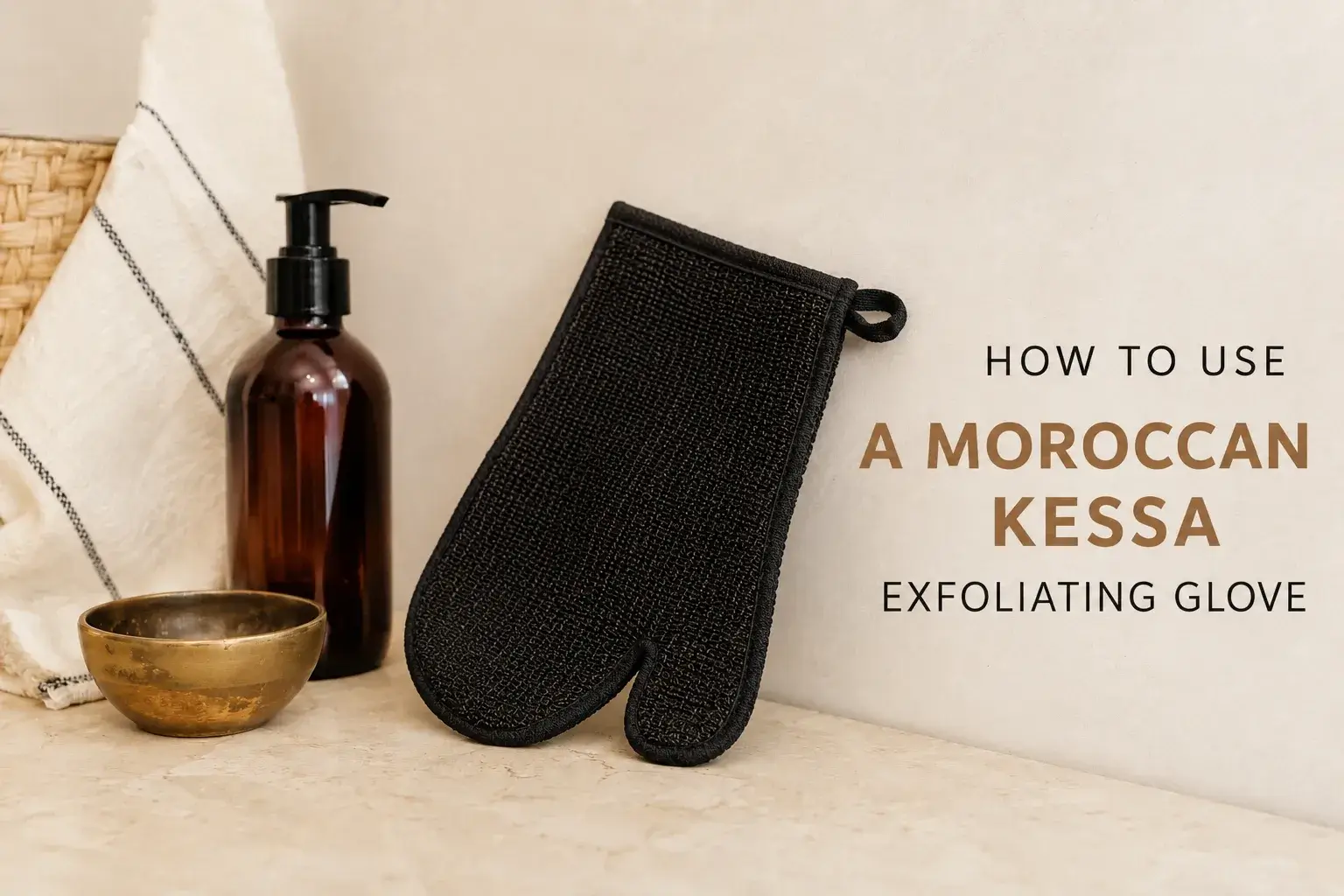
For centuries, the traditional Moroccan hammam bathhouse ritual has been celebrated worldwide for producing unbelievably smooth, radiant, and rejuvenated skin. At the heart of this ancient practice lies a deceptively simple yet remarkably effective tool: the Moroccan Kessa glove. Unlike standard bath loofahs or synthetic mesh sponges that merely wash the surface, a authentic Kessa mitt uses uniquely woven crepe fabric to lift away layers of dead skin cells, debris, and built-up toxins, revealing the glowing, soft skin beneath.
If you have ever wondered how to replicate this spa-quality deep exfoliation at home, mastering the proper technique is essential. Using a Kessa glove incorrectly can lead to skin irritation, whereas following the true traditional method produces satisfying rolls of dead skin and unrivaled smoothness. In this comprehensive step-by-step guide, you will learn how to prepare your skin, execute the ideal scrubbing motion, care for your glove, and avoid common exfoliation pitfalls.
What Is a Moroccan Kessa Glove and How Does It Work?
A Kessa glove (also written as Kessah or Khaima) is a traditional coarse exfoliating mitt historically crafted from animal hair or goat silk, and today typically constructed from high-density granular crepe fabric. Designed with a distinct rough, cross-hatched texture, the mitt creates friction against the epidermis without needing harsh microbeads or abrasive chemical additives.
When combined with steam and traditional prep products like Moroccan black soap (Savon Noir), the fibers of the glove grip dead skin cells that have been softened by moisture. Instead of dissolving skin chemically, the physical mechanical action rolls off stratum corneum build-up into visible gray or white threads—a process known in French-Moroccan spa vocabulary as gommage.
To understand the full cultural history and physical benefits of this staple hammam tool, explore our guide on unveiling the wonders of the Moroccan exfoliating glove Kessa.
The Key Benefits of Kessa Exfoliation
Incorporating a Kessa glove into your body-care routine offers several skin-nourishing advantages:
- Deep Dead Skin Removal: Mechanically sloughs off accumulated dead skin that causes dullness, dryness, and rough patches on elbows, knees, and heels.
- Prevents and Reduces Ingrown Hairs: Unblocks clogged hair follicles, making it an excellent pre-waxing or pre-shaving treatment.
- Stimulates Blood and Lymphatic Circulation: The firm rubbing action encourages localized blood circulation and supports natural lymphatic drainage, contributing to firmer-looking skin.
- Enhances Product Absorption: Removing the barrier of dead skin allows body oils, creams, and moisturizers to penetrate much deeper into the skin tissue.
- Smooths Skin Texture: Helps treat keratosis pilaris ("strawberry legs") and uneven surface texture over consistent, gentle use.
Preparation: Setting Up Your At-Home Hammam
The secret to successful Kessa exfoliation lies almost entirely in skin preparation. You cannot simply put on a dry glove and start scrubbing dry skin; doing so will cause friction burn and redness without removing dead skin effectively.
1. Soften the Skin with Warm Water and Steam
Begin by taking a long, hot shower or bath for 10 to 15 minutes. The water should be comfortably warm to generate ample steam, which helps open pores and soften the outermost layers of dead skin cells. Stay under the water stream or lie in the bath so your entire body is thoroughly soaked.
2. Apply Moroccan Black Soap (Savon Noir)
Moroccan black soap is an olive oil-based paste rich in vitamin E and natural fatty acids. Take a small scoop of black soap and smooth a thin layer all over your warm, damp skin. Work it into a light, non-foaming emulsion.
Leave the black soap on your body for 5 to 10 minutes while standing in the steam. The natural alkalinizing properties of olive oil soap break down intercellular lipids—the "glue" holding dead skin cells together.
3. Rinse the Soap off Completely
Crucial Rule: You must completely rinse off all black soap before using the Kessa glove. If soap remains on your skin, it creates a slippery barrier, preventing the Kessa glove from gripping the dead skin cells. Use warm water to thoroughly wash away every trace of soap until your skin feels grip-ready rather than slippery.
Step-by-Step Guide: How to Use the Kessa Glove
Now that your skin is warm, softened, and free of soap residue, you are ready to begin the exfoliation process.
Step 1: Wet and Wring Out Your Kessa Glove
Submerge your Kessa glove in warm water until it is fully soaked, then wring out all excess water. The glove should be damp, not dripping wet.
Step 2: Step Away from the Direct Water Stream
Turn off the shower or step away from the running water stream. Your skin should remain damp, but water should not be actively running over the area you are about to scrub. Excess water will wash away friction.
Step 3: Begin Scrubbing with Long, Steady Strokes
Slip your hand inside the glove. Start on a flat, large area of the body such as your arms, calves, or thighs. Apply moderate, firm pressure and move the mitt in back-and-forth or up-and-down motion.
Technique Tip: Use firm, linear strokes rather than small circular motions. Linear strokes allow the crepe weave to catch dead skin and pull it cleanly off the epidermis.
Step 4: Observe the "Gommage" Effect
After a few passes over the same area, you will begin to see small, dark or grayish rolls of dead skin forming under the glove. This is completely normal and indicates that the process is working. Continue moving systematically across your arms, shoulders, chest, stomach, legs, and feet.
Step 5: Rinse Body with Fresh Water
Once you have scrubbed your entire body, turn the shower back on and rinse away all skin rolls and debris with lukewarm or cool water. A cooler final rinse helps close pores and soothe skin after intense stimulation.
Post-Exfoliation Care: Locking in Moisture
Because the Kessa glove strips away dead surface cells and temporary surface oils, post-exfoliation moisturization is essential to maintain skin barrier integrity, as highlighted in clinical dermatological studies published by the American Academy of Dermatology.
1. Apply Pure Plant Oils
Directly after patting your skin dry with a clean towel, apply a generous layer of pure cold-pressed botanical oil. Traditional Moroccan skincare relies heavily on Argan oil due to its high concentration of vitamin E, squalene, and essential fatty acids. If you want to learn more about this golden elixir, check out our guide on what Argan oil is and everything you need to know about its benefits. For those interested in bulk or cosmetic sourcing, you can also explore buying premium organic Argan oil.
2. Address Hyperpigmentation & Dark Spots
After exfoliating, skin absorbs targeted topical treatments much more effectively. If you suffer from uneven skin tone, dark knees, or elbow discoloration, you can incorporate traditional botanical brightening agents into your routine. Read about how natural minerals perform in our study on Nila powder for hyperpigmentation.
3. Extend Your Moroccan Self-Care Ritual
The Moroccan beauty approach emphasizes holistic, plant-based self-care from head to toe. Complete your routine with traditional lip and cheek tints like Aker Fassi. Learn more about these botanical formulations in our breakdown of 7 Aker Fassi lip stain benefits you need to know.
Common Kessa Glove Mistakes to Avoid
| Mistake | Why It Happens | How to Fix It |
|---|---|---|
| No skin rolls appearing | Skin was not steamy enough, or soap was not completely rinsed off. | Soak in warm steam for 10–15 mins; rinse ALL soap before scrubbing. |
| Redness or stinging skin | Scrubbing too hard or using circular, aggressive friction. | Use firm, long linear strokes and moderate pressure. |
| Using the Kessa on the face | Facial skin is much thinner than body skin. | Reserve the traditional Kessa for body care only; use gentle face exfoliants instead. |
| Exfoliating daily | Over-exfoliating strips the lipid barrier, causing irritation. | Limit Kessa exfoliation to once per week or once every 10–14 days. |
How to Clean, Sanitize, and Store Your Kessa Glove
Proper hygiene prevents bacteria, fungi, and mold from accumulating in the fibers of your glove:
- Rinse thoroughly: After every bath, rinse the glove with hot water until all skin particles and residue are completely gone.
- Wash with mild soap: Use a simple antibacterial or gentle soap to hand-wash the mitt. Avoid harsh bleach or fabric softeners, which degrade crepe fibers.
- Air dry completely: Hang the Kessa glove by its loop in a dry, well-ventilated area outside the damp shower stall to air-dry completely between uses.
- Replace periodically: Depending on frequency of use, replace your Kessa glove every 3 to 6 months to ensure optimal texture and hygienic safety.
Frequently Asked Questions (FAQ)
Can I use a Kessa glove without Moroccan Black Soap?
Yes, you can use a Kessa glove with just warm water and steam. However, Moroccan black soap significantly improves results because its natural olive oil composition softens dead skin, making it far easier for the crepe fibers to lift away surface buildup.
Why am I not seeing dead skin roll off when I scrub?
The most common reasons are: 1) Your skin was not steamed or soaked long enough, 2) You did not rinse off all soap residue prior to scrubbing, or 3) You are using too much water while scrubbing. Make sure your skin is damp, not dripping, and that all soap is completely rinsed away before applying the mitt.
How often should I use a Moroccan Kessa glove?
For normal to robust skin, using a Kessa glove once a week is ideal. For dry or sensitive skin, once every two weeks is sufficient. Over-exfoliating can damage your natural skin barrier and lead to dry patches or irritation.
Can I use the Kessa glove on my face?
It is generally recommended to avoid using traditional body Kessa gloves on the delicate skin of the face. Facial skin is significantly thinner and more prone to micro-tears. Opt for gentler chemical exfoliants (like mild AHAs/BHAs) or ultra-soft facial cleansing cloths instead.
Conclusion
Mastering the Moroccan Kessa exfoliating glove is one of the most effective, natural ways to achieve smooth, healthy, and luminous body skin. By properly steaming your body, prepping with traditional black soap, completely rinsing before scrubbing, and finishing with a nourishing oil like Argan, you can enjoy an authentic Moroccan hammam experience in the comfort of your own home.