Bentonite vs Rhassoul Clay: Which Suits Your Skin Type?
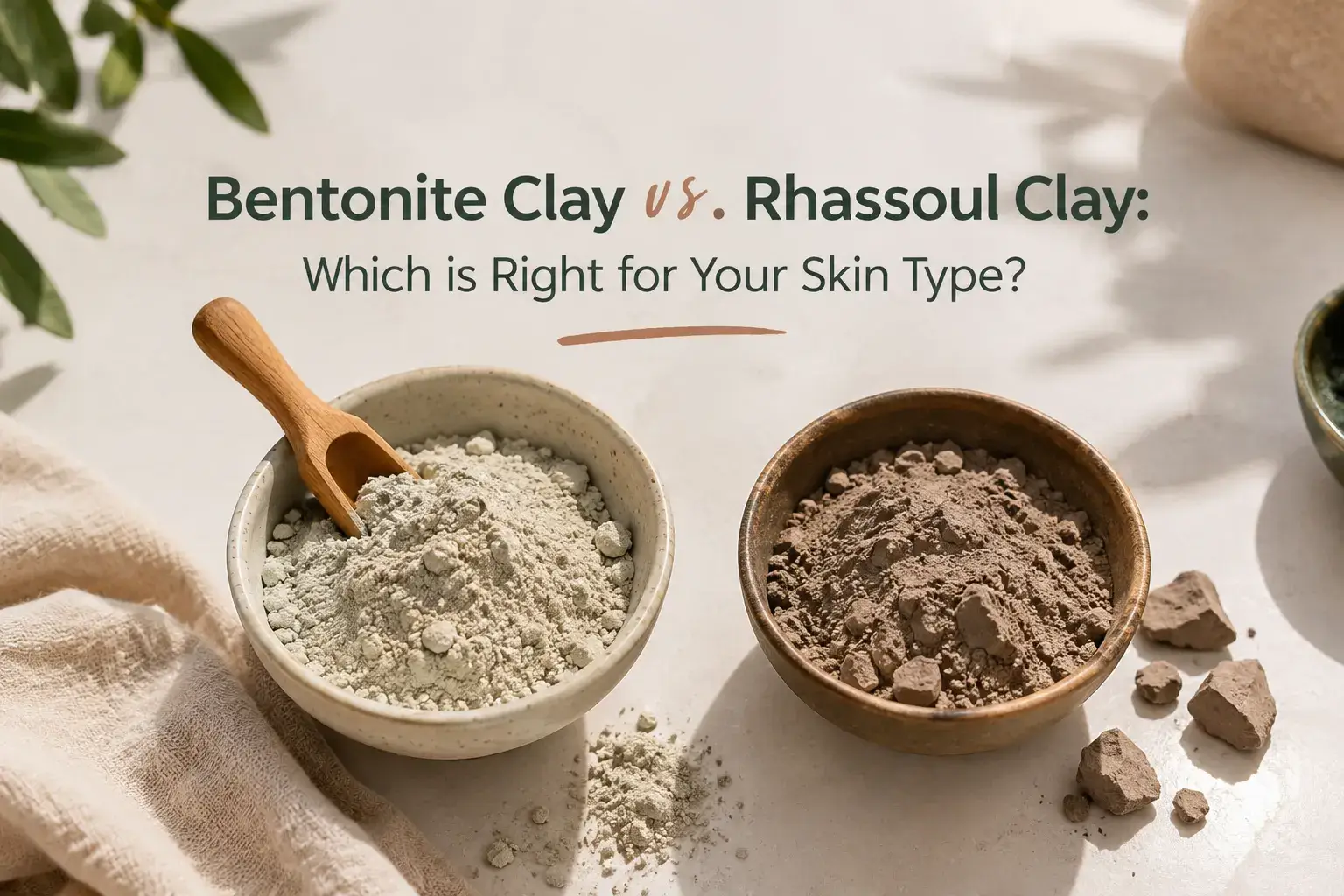
Clays have been cornerstone ingredients in natural skincare for thousands of years. Long before modern lab-synthesized active ingredients emerged, ancient cultures relied on mineral-rich earth to detoxify, cleanse, and revitalize the skin. Today, among the wide spectrum of cosmetic clays available, two specific varieties stand out for their exceptional therapeutic qualities: Bentonite clay and Rhassoul clay.
While both natural clays excel at absorbing impurities and excess sebum, they possess distinct mineral compositions, physical properties, pH levels, and extraction origins. Using the wrong clay for your specific skin type can lead to unexpected dryness, irritation, or underwhelming results. In this comprehensive comparison guide, we will examine the differences between Bentonite clay vs. Rhassoul clay, how each functions scientifically on the skin, and how to determine which one is best suited for your routine.
Understanding Bentonite Clay: Origins and Properties
Bentonite clay is formed primarily from aged volcanic ash that has weathered over time in the presence of water. Named after Fort Benton, Wyoming—where large deposits were commercially identified—bentonite clay is sourced globally from volcanic deposits. The primary mineral constituent of bentonite is montmorillonite, a soft phyllosilicate mineral known for its powerful swelling ability.
Key Characteristics of Bentonite Clay
- High Swelling Capacity: When combined with liquid, bentonite swells rapidly, expanding several times its dry volume into a gel-like paste.
- Strong Negative Electrical Charge: In its hydrated state, bentonite carries a negative electrical charge. Positively charged ions—such as environmental toxins, heavy metals, and excess sebum—are bound to the surface of the clay through an adsorption process.
- High Absorbency: It pulls oil and moisture aggressively from the upper layers of the epidermis, making it one of the most deep-cleansing natural ingredients available.
- Alkaline pH: Hydrated bentonite typically exhibits a high pH range (between 8.5 and 9.5), which is noticeably higher than the skin’s natural, slightly acidic acid mantle (pH 4.5 to 5.5).
Understanding Rhassoul Clay: Origins and Properties
Rhassoul clay (also commonly spelled Ghassoul) takes its name from the Arabic word Rassala, meaning "to wash." Mined exclusively from deep within the Atlas Mountains of Morocco, Rhassoul is an ancient mineral clay formed through natural geothermal processes and volcanic activity spanning millions of years. It has been used for over twelve centuries across North Africa and the Mediterranean as a soap substitute, facial treatment, and hair conditioner.
Because Rhassoul comes from a single geographic origin, ensuring authentic procurement is vital for cosmetic manufacturers and consumers alike. Understanding how to source authentic Moroccan cosmetic ingredients guarantees that the clay retains its unadulterated trace minerals, free from heavy chemical contaminants or artificial fillers.
Key Characteristics of Rhassoul Clay
- Rich Mineral Density: Rhassoul features extraordinary concentrations of silica (over 50%), magnesium, iron, calcium, potassium, and sodium.
- Gentle Ion Exchange: Rather than stripping the skin aggressively, Rhassoul functions through a balanced cation exchange. It absorbs surface grease and impurities while releasing nourishable minerals back into the epidermis.
- Low Swelling Index: Unlike bentonite, Rhassoul does not expand drastically in water. It dissolves into a smooth, silky, butter-like paste.
- Skin-Friendly pH: Rhassoul exhibits a neutral to mildly alkaline pH (around 7.0 to 7.5), making it significantly gentler on the skin's moisture barrier than high-alkaline volcanic clays.
Bentonite Clay vs. Rhassoul Clay: Side-by-Side Comparison
To help you evaluate these two powerhouse ingredients, the table below breaks down their primary technical and cosmetic distinctions:
| Feature | Bentonite Clay | Rhassoul Clay |
|---|---|---|
| Primary Origin | Volcanic ash deposits (Global, USA) | Geothermal lake deposits (Atlas Mountains, Morocco) |
| Key Minerals | Montmorillonite, Sodium, Calcium | Silica, Magnesium, Potassium, Calcium |
| pH Level (Hydrated) | Alkaline (8.5 – 9.5) | Near-Neutral (7.0 – 7.5) |
| Texture when Mixed | Thick, smooth, dense gel paste | Silky, fluid, micro-exfoliating mud |
| Absorbency Strength | Extremely High (Intense drawing power) | Moderate-High (Balanced absorption) |
| Drying Tendency | High (Can cause tightness if left too long) | Low to Moderate (Non-stripping) |
| Primary Ideal Skin Type | Very Oily, Severely Acne-Prone | Dry, Sensitive, Combination, Normal, Aging |
How Each Clay Performs on Specific Skin Types
1. Oily and Severely Acne-Prone Skin
If your primary skin concern is hyper-seborrhea (excessive oil production), frequent breakout spikes, or persistent blackheads, Bentonite clay is exceptionally effective. Its massive swelling and absorbency allow it to reach deep into clogged pores, soaking up sebum plugs and drawing out trapped debris.
However, caution is required: Overusing bentonite can trigger a rebound oil response. If you strip every trace of sebum from the skin surface, your sebaceous glands may compensate by producing even more oil. For oily skin types, bentonite works best when applied once a week and rinsed off before it completely dries and cracks.
2. Dry, Dehydrated, and Mature Skin
For individuals dealing with dry patches, flakiness, or fine lines related to moisture loss, Rhassoul clay is far superior. Bentonite is generally too harsh for dry skin, as it pulls water away alongside lipid fats.
Rhassoul clay cleanses without damaging the stratum corneum (the skin’s outermost protective barrier). Its exceptionally high silica content helps support skin elasticity and texture, while magnesium plays a crucial role in suppressing inflammation and protecting cellular barrier function. After rinsing off a Rhassoul treatment, the skin feels smooth, hydrated, and supple rather than tight or dehydrated.
3. Sensitive and Reactive Skin
Sensitive skin types prone to redness, rosacea, or eczema often struggle with clay treatments because of the intense pulling sensation and high alkalinity associated with standard mud masks. In this scenario, Rhassoul clay is the clear recommendation.
Because Rhassoul sits much closer to the skin’s native pH level than bentonite, it causes minimal disruption to the acid mantle. It cleanses gentle micro-particles from pores without provoking inflammatory flare-ups. Furthermore, Rhassoul is versatile enough to be used as a scalp treatment without irritating sensitive hair follicles; in fact, many beauty enthusiasts leverage the rhassoul clay hair mask benefits for curly hair to clarify textured strands without stripping natural moisture.
4. Combination Skin
Combination skin requires balance—managing an oily T-zone (forehead, nose, and chin) while preventing cheek dehydration. Both clays can play a role here:
- Multi-Masking Approach: Apply Bentonite clay exclusively to the T-zone to address congested pores, while applying Rhassoul clay to the cheeks and neck.
- Single Clay Approach: Use Rhassoul clay over the entire face. Rhassoul’s unique mineral equilibrium is capable of absorbing excess oil from the T-zone while maintaining lipid hydration across drier regions.
How to Mix and Apply Clay Masks for Optimal Results
To maximize the cosmetic performance of either clay, formulation and application methods matter just as much as picking the right ingredient.
1. The Metal Rule for Bentonite Clay
Always mix bentonite clay using wooden, glass, or ceramic utensils and bowls. Because bentonite contains a strong negative ionic charge, contact with metal tools can alter its electrical properties and diminish its binding effectiveness before it touches your skin. Rhassoul clay is far less sensitive to metal tools, but using non-metal equipment remains best practice for all natural clay formulations.
2. Elevate Your Mask with Hydrosols
While plain distilled water works well to hydrate raw clay powders, blending your mask with natural floral waters enhances botanical benefits and restores pH balance:
- For Sensitive or Dry Skin: Mix Rhassoul clay with authentic rose hydrosol. Learning how to use rose water in your morning and evening skincare routine illustrates how botanical floral waters soothe inflammation and maintain lasting moisture reserves.
- For Oily or Combination Skin: Blend either clay with orange blossom hydrosol. Incorporating orange blossom water for cosmetics uses, benefits, and formulation provides natural astringent qualities that tighten enlarged pores while balancing sebum production.
3. Never Let Your Clay Mask Fully Dry
A common mistake in home skincare is allowing a clay mask to dry until it cracks, flakes, and turns white. Clay functions in three distinct phases during application:
- The Damp Phase: The skin absorbs beneficial minerals from the wet clay.
- The Start-of-Dry Phase: The clay contracts slightly, stimulating capillary blood flow and absorbing surface oils. This is when you should rinse the mask off.
- The Dry Phase: The clay draws moisture directly out of the deeper skin layers, leaving skin irritated, red, and vulnerable to environmental stressors.
Always rinse your clay mask off when it feels sticky and tacky to the touch, before it fully hardens.
A Note for Formulators and Skincare Brands
If you are a cosmetic formulator, spa owner, or indie brand creator looking to add clay masks to your product lineup, selection depends heavily on your brand's core demographic. While bentonite is widespread in low-cost acne treatments, premium holistic skincare lines prioritize authentic Rhassoul for its multi-use versatility (face, body, and hair) and luxurious texture.
When developing retail-ready products, working with established partners makes a difference. Consulting a dedicated guide on private label Moroccan skincare ingredients and packaging suppliers helps streamline formulation stability, safety compliance, and sustainable packaging selections for clay-based products.
Frequently Asked Questions
Can I blend Bentonite and Rhassoul clay together?
Yes. Combining equal parts Bentonite and Rhassoul clay offers a balanced treatment for oily yet reactive skin types. Bentonite delivers deep pore-cleansing power, while Rhassoul buffers the intensity and adds smoothing minerals like silica and magnesium.
Why does my skin look red after using a bentonite clay mask?
Mild temporary redness is normal after using bentonite. As the clay contracts and dries, it pulls blood flow toward the surface of the skin (a process called vasodilation). However, if the redness persists for hours or is accompanied by burning or itching, the mask was likely left on too long or was too alkaline for your barrier function.
How often should I use a clay mask?
For oily skin types using bentonite clay, 1 to 2 times per week is ideal. For dry, sensitive, or combination skin using Rhassoul clay, 1 treatment per week (or once every two weeks) is usually sufficient to maintain clear, balanced skin without over-exfoliating.
Is Rhassoul clay suitable for acne-prone skin?
Absolutely. Rhassoul clay naturally removes sebum plugs and detoxifies pores without stripping moisture. Because dried-out skin can actually worsen acne breakouts, Rhassoul's gentle clarifying properties make it an excellent choice for hormonal or inflammatory acne.
Final Verdict: Which Clay Should You Choose?
Choosing between Bentonite clay and Rhassoul clay ultimately comes down to your personal skin type and skincare goals:
- Choose Bentonite Clay if you have extremely oily skin, stubborn blackheads, or need heavy-duty spot treatments for localized breakouts.
- Choose Rhassoul Clay if you have dry, sensitive, combination, aging, or normal skin—or if you want a multi-purpose mineral treatment suitable for both your face and hair care routines.
By understanding the physical mechanics of these volcanic and mineral clays, you can select the perfect option to clarify your pores, protect your delicate skin barrier, and reveal a healthy, natural glow.