Orange Blossom Water Hair Rinse: How to Clarify Hard Water Buildup & Restore Shine
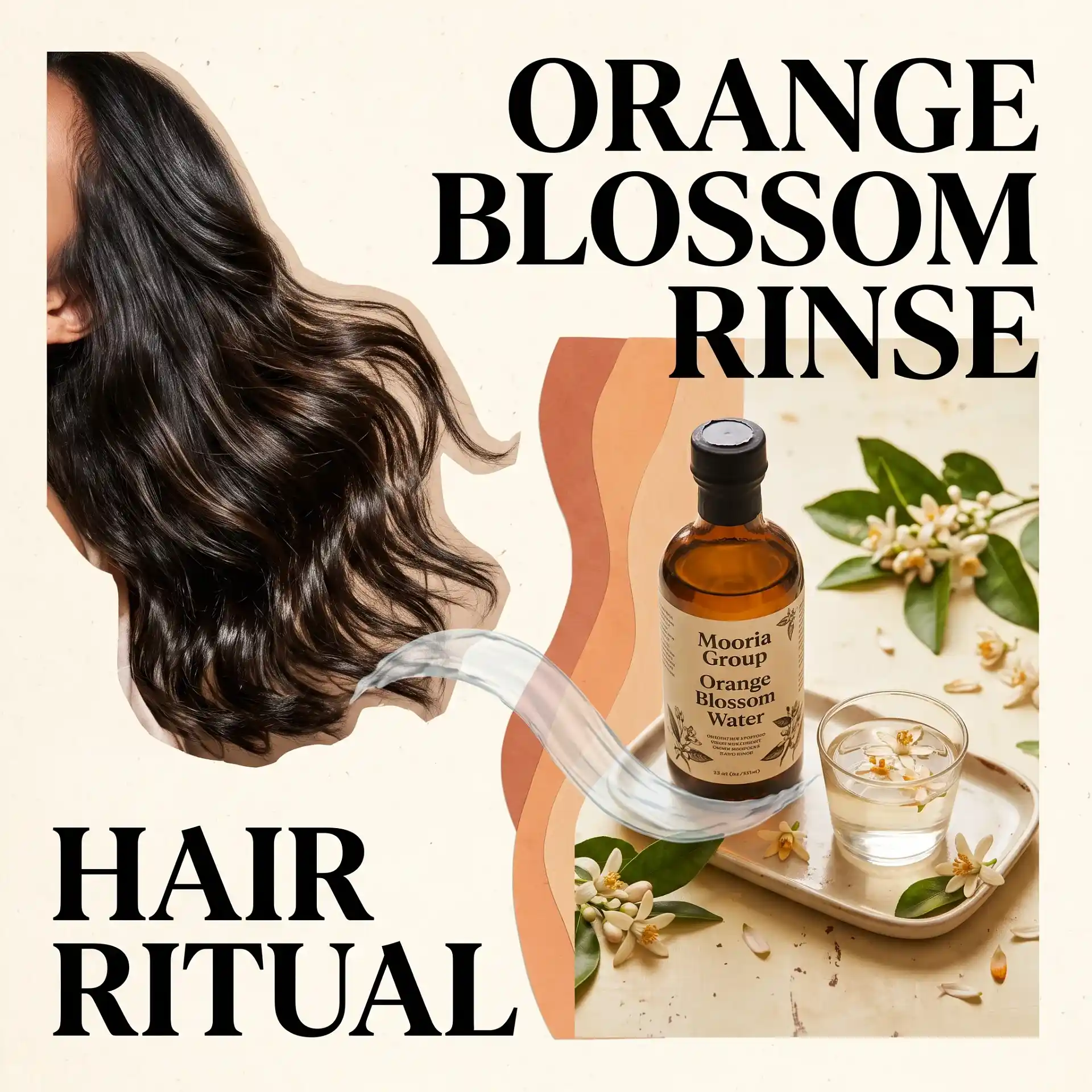
If your hair feels perpetually dry, straw-like, or inexplicably dull despite using high-end shampoos and deep conditioners, the culprit might not be your hair products at all. For millions of households, hard water buildup quietly sabotages hair health daily. Dissolved minerals in tap water attach to the hair shaft, creating an invisible film that blocks moisture, disrupts the scalp’s natural pH, and strips away natural luster.
While chemical clarifying shampoos offer a temporary fix, they frequently rely on harsh surfactants that strip essential oils and leave hair feeling brittle. Enter the orange blossom water hair rinse. Derived from the steam distillation of bitter orange blossoms (Citrus aurantium), pure orange blossom hydrosol offers a gentle, acidic botanical solution that breaks down mineral deposits, smoothes open cuticles, and restores brilliant natural shine without harsh chemicals.
In this comprehensive guide, you will learn the science behind hard water damage, why orange blossom water works as a natural clarifier, and exact step-by-step recipes to transform your hair care routine.
Understanding Hard Water Buildup on Hair
Hard water is water containing high concentrations of dissolved minerals, primarily calcium, magnesium, copper, and iron. According to data from the U.S. Geological Survey (USGS), over 85% of tap water supplies qualify as hard to varying degrees.
When you wash your hair with hard water, these dissolved mineral ions react with fatty acids in shampoos to create an insoluble precipitate—commonly known as soap scum. Even when using sulfate-free cleansers, calcium and magnesium ions bind directly to the negatively charged proteins (keratin) on the hair surface.
Signs Your Hair is Suffering from Hard Water Buildup
- Persistent Dullness: Mineral deposits scatter light rather than reflecting it, making hair look matte and lifeless.
- Chronic Dryness and Roughness: Deposits form a barrier that prevents moisture and hydrating ingredients from penetrating the cortex.
- Frizz and Tangling: Minerals force the cuticle scales to remain open, causing strands to catch against one another.
- Scalp Irritation: Mineral residue combined with sebum can clog hair follicles, leading to itching or flake buildup.
- Color Fading and Brassiness: Copper and iron react with dye molecules, shifting blonde tones brassy and muting darker shades.
Why Orange Blossom Water Clarifies Hair & Restores Luster
Pure orange blossom water—also known as Neroli hydrosol—is far more than an aromatic floral mist. Its chemical composition makes it uniquely suited to combatting mineral buildup while supporting overall scalp balance.
1. Optimal pH Balancing Capabilities
Healthy hair shafts and scalp possess a naturally acidic pH ranging between 4.5 and 5.5. A study published in the International Journal of Trichology revealed that shampoos and water rinses with an alkaline pH increase friction, cause cuticle swelling, and accelerate fiber breakage. Tap water usually sits at a neutral to alkaline pH of 7.0 to 8.5.
Orange blossom hydrosol carries a mildly acidic pH of approximately 4.0 to 5.0. When applied after washing, it immediately neutralizes alkaline residue, helping the cuticle layer lay flat against the hair shaft. Sealed cuticles reflect light dramatically better, resulting in intense shine and softness.
2. Mild Organic Acids and Chelating Action
Orange blossom distillate contains trace organic acids and water-soluble botanical compounds that exert a mild chelating effect. Unlike synthetic EDTA chelators found in industrial shampoos, these natural organic compounds gently break down weak electrostatic bonds between calcium minerals and keratin fibers without stripping the hair’s protective lipophilic mantle. To explore more about its biochemical makeup, read our deep dive into orange blossom water for cosmetic formulations.
3. Antimicrobial and Soothing Scalp Benefits
Hard water minerals frequently combine with natural oils to aggravate scalp conditions like seborrheic dermatitis. Research archived on the National Center for Biotechnology Information (NCBI) confirms that Citrus aurantium distillates exhibit mild antimicrobial and anti-inflammatory activities. An orange blossom water hair rinse calms itchy scalps, purifies hair follicles, and reduces micro-inflammation.
"Restoring acidic balance to the hair cuticle after exposure to hard water is single-handedly the fastest way to eliminate dullness and restore mechanical elasticity."
How to Prepare and Use an Orange Blossom Water Clarifying Rinse
Incorporating an orange blossom water hair rinse into your weekly wash routine is simple, customizable, and highly effective. Below are two proven recipes tailored to different clarifying needs.
Recipe 1: Daily/Weekly Express Glossing Rinse
Best for mild hard water maintenance, boosting shine, and lightweight detangling.
- 1/2 cup pure, steam-distilled orange blossom water
- 1 cup distilled or filtered water (never tap water)
- 3 drops light plant oil, such as jojoba or light argan oil (optional for extra dryness)
Recipe 2: Deep Clarifying Mineral-Removal Rinse
Best for severe hard water buildup, swimmers, or hair that feels heavily coated.
- 1/2 cup pure orange blossom water
- 2 tablespoons raw, unfiltered apple cider vinegar (ACV)
- 1 cup warm distilled water
Step-by-Step Application Protocol
Step 1: Cleanse Your Hair
Wash your hair with your regular gentle, sulfate-free shampoo or a natural clarifying base. If you prefer a completely low-poo, plastic-free cleansing method, consider using a Rhassoul clay hair mask to draw out impurities before applying your acidic rinse.
Step 2: Squeeze Out Excess Water
Gently press excess shower water out of your hair using a microfiber towel or cotton t-shirt. Removing saturated tap water allows the rinse to coat the hair shaft without immediate dilution.
Step 3: Saturate Scalp and Lengths
Slowly pour the orange blossom rinse over your scalp, letting it flow down through the lengths and ends. Alternatively, fill a spray bottle with the mixture and thoroughly saturate your entire head from root to tip.
Step 4: Massage and Pause
Gently massage your scalp with your fingertips for 2 to 3 minutes. This stimulates circulation while giving the mild acids adequate time to break down mineral deposits and seal open cuticles.
Step 5: Rinse or Leave-In
For fine hair prone to oiliness, do a brief final splash using cool distilled water. For dry, coarse, or textured hair, leave the rinse in without washing it out; as the hair dries, the subtle citrus-floral aroma lingers while keeping cuticles aligned.
Step 6: Moisture Lock
Follow up by applying 2–3 drops of a pure botanical oil to dampen ends. If you are unsure how best to layer oils, review our guide on leaving argan oil in hair overnight to maximize shine retention.
Orange Blossom Water vs. Other Natural Rinses
Natural hair care enthusiasts frequently compare orange blossom water with traditional apple cider vinegar or rose water rinses. Here is how they stack up against each other:
| Feature | Orange Blossom Water | Apple Cider Vinegar (ACV) | Rose Water |
|---|---|---|---|
| Primary Benefit | Clarifies buildup & smooths cuticle | Heavy mineral & product stripping | Hydration & soothing scalp |
| pH Level | ~4.5 (Ideal for daily hair balance) | ~2.5 - 3.0 (Very acidic; must dilute) | ~5.5 (Neutral to mildly acidic) |
| Scent Profile | Uplifting, sweet floral-citrus aroma | Pungent sour vinegar scent | Soft, delicate floral aroma |
| Risk of Over-Drying | Very Low | Moderate to High if overused | None |
While ACV is a potent chelating agent, its strong odor and low pH can cause dryness if mismeasured. Rose water is exceptionally hydrating—as highlighted in our tutorial on botanical floral waters in daily routines—but it lacks the natural citrus acidity required to cut through heavy hard water deposits. Orange blossom water strikes the perfect middle ground between clarifying efficacy and gentle hydration.
Tailoring the Treatment to Your Specific Hair Type
Fine or Low-Porosity Hair
Low-porosity hair has tightly bound cuticles that collect mineral buildup quickly, causing hair to look flat and oily. Use an orange blossom water rinse once a week to prevent heavy accumulation without weighing down fine strands.
High-Porosity or Color-Treated Hair
High-porosity hair has gaps and tears in the cuticle, making it susceptible to absorbing minerals like copper and iron, which alter hair dyes. Use the rinse twice a week to lock down cuticles and preserve color vitality. Combine it with a nourishing oil regimen like applying pure argan oil to maintain elasticity.
Curly and Coily Textures (Types 3 & 4)
Textured hair requires maximum moisture, which hard water severely hinders. Replace tap water in your leave-in spray bottles with a 50/50 blend of orange blossom water and distilled water to keep curls defined, springy, and mineral-free between wash days.
Common Mistakes to Avoid
- Using Synthetic Orange Flower Water: Ensure your product is 100% pure steam-distilled Citrus aurantium hydrosol. Many grocery store brands are culinary syrups made of tap water, alcohol, and synthetic perfumes, which leave sticky residues.
- Diluting with Tap Water: Diluting your rinse with the very hard tap water causing your issue neutralizes the clarifying benefits. Always use distilled or demineralized water.
- Over-Clarifying Dry Hair: If using the ACV + Orange Blossom recipe, limit use to once every 2 weeks to avoid stripping natural sebum.
Frequently Asked Questions
Can orange blossom water remove severe mineral buildup on its own?
For mild to moderate hard water buildup, pure orange blossom water applied weekly is highly effective. However, if your hair has months or years of heavy mineral accumulation, combine orange blossom hydrosol with apple cider vinegar or use a targeted chelating treatment first, then maintain with orange blossom water.
Will an orange blossom water rinse dry out my hair?
No. Pure orange blossom hydrosol is gentle and non-stripping. Because its natural pH closes the hair cuticle, it actually helps lock moisture inside the hair shaft, reducing dryness caused by hard tap water.
Can I leave orange blossom water in my hair without rinsing it out?
Yes. Because pure orange blossom hydrosol contains no sugars, synthetic dyes, or heavy oils, it works wonderfully as a leave-in mist on damp or dry hair to smooth flyaways and refresh shine.
Is orange blossom water safe for color-treated or bleached hair?
Extremely safe. In fact, color-treated hair benefits greatly from its low pH, which closes cuticles opened during chemical dyeing, trapping color molecules inside and preventing premature color fading.
Final Thoughts
Hard water doesn't have to dictate the texture and shine of your hair. By introducing a botanical orange blossom water hair rinse into your routine, you can effectively neutralize mineral deposits, align your hair cuticles, and balance your scalp's pH naturally. Enjoy smooth, radiant, and resilient strands refreshed by the timeless aroma of natural orange blossoms.