Does Blue Nila Powder Fade Stubborn Dark Spots? The Science of Moroccan Botanical Brightening
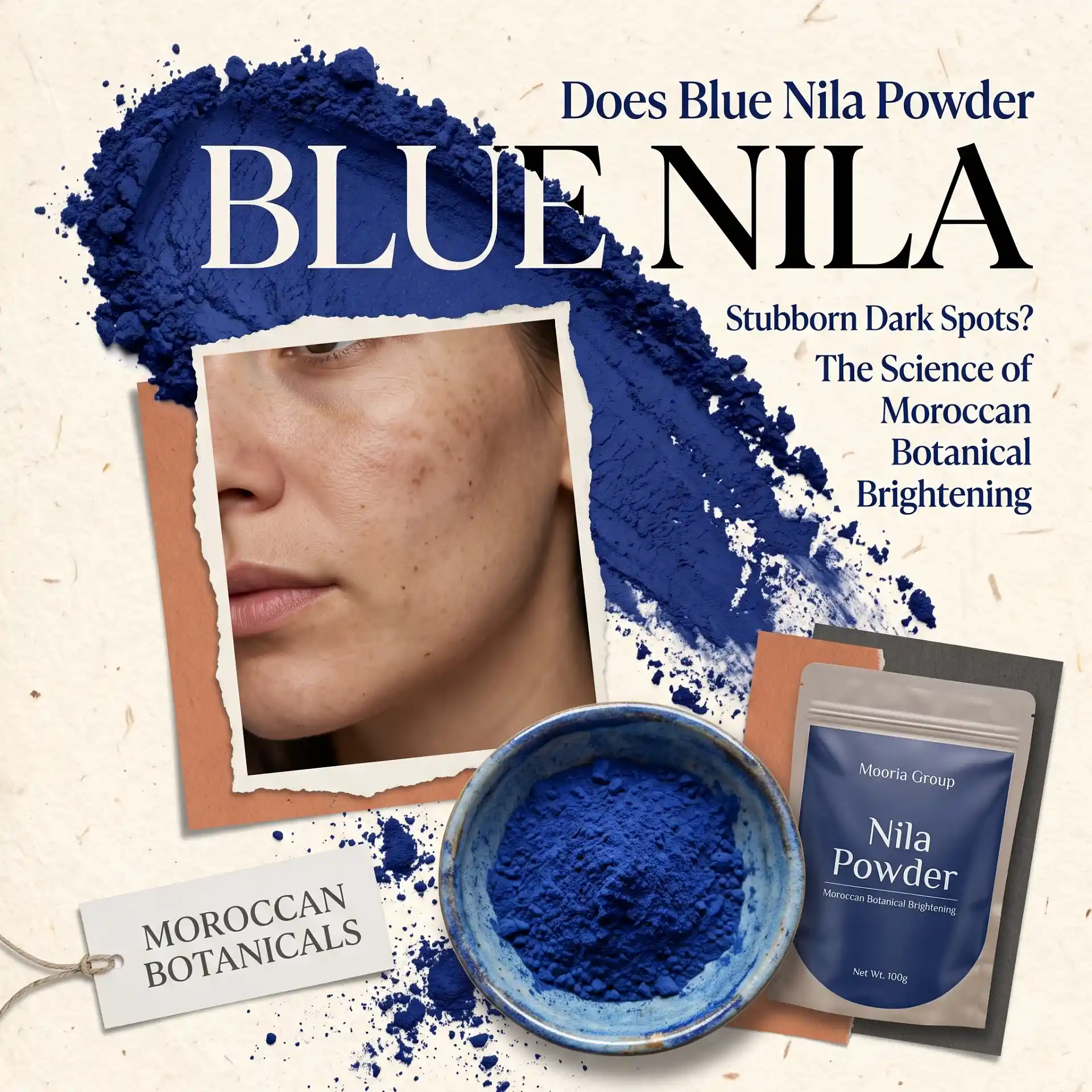
Hyperpigmentation, uneven skin tone, and stubborn dark spots are among the most persistent skincare concerns across all skin types. Whether left behind by acne breakouts, excessive sun exposure, hormonal fluctuations (melasma), or natural skin aging, hyperpigmentation occurs deep within the epidermal layers, making it notoriously difficult to clear quickly.
In recent years, modern beauty enthusiasts have turned their attention toward ancient botanical secrets, looking beyond conventional chemical peels and synthetic brightening agents. Among the most intriguing Moroccan traditions gaining international acclaim is Blue Nila powder (often referred to simply as Nila or Nila Zarkaa).
Hailing from southern Morocco and long cherished by Sahrawi women for its skin-luminous properties, Nila powder is praised for its ability to reduce discoloration, unify complexion, and diminish stubborn spots. But does Blue Nila powder actually fade stubborn dark spots from a biological standpoint, or is its reputation built on immediate visual tricks? In this comprehensive guide, we unpack the history, scientific mechanisms, skin benefits, and practical application of Moroccan Blue Nila powder.
What Is Authentic Moroccan Blue Nila Powder?
To understand how Blue Nila works on hyperpigmentation, it is vital to first understand what authentic Blue Nila powder actually is. Culturally and historically, Nila refers to a natural blue pigment sourced from indigenous botanical plants—primarily species of the Indigofera family (such as Indigofera tinctoria or Indigofera suffruticosa), alongside specific mineral-rich clay sediments processed in southwestern Moroccan oases and Saharan regions.
For centuries, Sahrawi women in the Moroccan desert applied Nila paste to their skin prior to major lifecycle celebrations, wedding rituals, and long journeys under harsh desert sun rays. Beyond its ceremonial value, Nila was prized as a protective veil against environmental exposure, phototoxic damage, and hyperpigmentation.
Key Distinction: True cosmetic Blue Nila powder used in Moroccan hammam traditions is distinct from industrial indigo fabric dyes or synthetic blue food coloring. Authentic cosmetic Nila is a finely micro-ground, plant-mineral blend optimized for delicate facial and body application without harsh chemical additives or caustic processing.
Understanding Hyperpigmentation: Why Dark Spots Are So Stubborn
Before evaluating any natural brightening remedy, it helps to understand why dark spots form. The color of human skin is determined by melanin, a pigment produced by specialized cells called melanocytes located in the basal layer of the epidermis. When skin experiences stress—such as ultraviolet (UV) radiation, inflammatory trauma, or oxidative stress—melanocytes overproduce melanin in concentrated pockets.
Common forms of dark spots include:
- Post-Inflammatory Hyperpigmentation (PIH): Dark marks remaining after acne lesions, eczema, or skin trauma heal.
- Solar Lentigines (Sun Spots): Flat, brownish spots caused by cumulative UV exposure over time.
- Melasma: Symmetrical patchiness often triggered by hormonal shifts combined with sun exposure.
Fading these spots requires a multi-pronged strategy: inhibiting excess melanin production, accelerating cellular turnover to shed pigment-laden dead skin cells, calming local skin inflammation, and neutralizing free radicals that trigger melanocyte hyperactivity. According to dermatological research published by the National Center for Biotechnology Information (NCBI), effective topical management of hyperpigmentation relies heavily on naturally derived antioxidants and anti-inflammatory compounds.
Does Blue Nila Powder Fade Dark Spots? The Science Behind the Ritual
While Blue Nila powder has not been as extensively subjected to clinical pharmaceutical trials as synthetic hydroquinone or retinoids, its physiological impact on dark spots stems from several established biological and optical mechanisms.
1. Rich Antioxidant & Anti-Inflammatory Profile
Botanical indigo extracts contain bioactive phytochemicals, including indican, flavonoids, and naturally occurring tannins. These compounds exhibit pronounced anti-inflammatory activity. Because post-inflammatory hyperpigmentation is directly sparked by skin inflammation, applying antioxidant-rich topicals like Nila helps calm micro-inflammation in the skin matrix, halting the chemical cascade that triggers melanocytes to produce surplus pigment.
2. Mild Physical & Micro-Exfoliating Properties
When authentic Nila powder is combined with a liquid carrier (such as yogurt, honey, or botanical floral waters) and gently massaged onto the skin, its fine micro-particulate structure acts as a exceptionally soft manual exfoliant. Gentle exfoliation helps loosen outer epidermal cells heavily saturated with melanin pigment. Over consistent weekly applications, this accelerated shedding of discolored surface cells reveals fresher, brighter skin underneath.
3. Natural Color Correction (Optical Brightening)
There is also an intriguing optical aspect to Blue Nila's immediate brightening effect. In color theory, blue sits directly opposite orange and yellow on the color wheel. Application of micro-fine natural blue pigments leaves an imperceptible structural tone that neutralizes yellowish, sallow, and dull undertones on the skin. While this optical effect is temporary, it provides an immediate appearance of radiance while the active phytochemicals work underneath over time.
4. Skin Barrier Protection & Hydration Synergy
Traditional Moroccan Nila formulations are rarely used in isolation; they are almost always blended with nourishing carriers like raw honey, strained cultured yogurt, or pure cold-pressed argan oil. These rich carriers fortify the lipid barrier, prevent trans-epidermal water loss, and create an optimal environment for skin regeneration.
How Blue Nila Compares to Modern Brightening Ingredients
To set realistic expectations, it is useful to see how Blue Nila powder fits into a broader botanical skincare spectrum compared to both synthetic actives and other traditional ingredients:
| Ingredient | Primary Brightening Mechanism | Best For | Potential Sensitivity |
|---|---|---|---|
| Blue Nila Powder | Anti-inflammatory, mild micro-exfoliation, optical color balance | Overall tone leveling, PIH, dullness, delicate skin | Very Low (when 100% pure) |
| Vitamin C (L-Ascorbic Acid) | Direct tyrosinase inhibition, potent antioxidant | Sun spots, collagen synthesis, intense discoloration | Moderate to High (can cause stinging) |
| Niacinamide (Vitamin B3) | Inhibits melanosome transfer to keratinocytes | Redness, barrier repair, post-acne marks | Low |
| Moroccan Clay Masks | Deep pore detoxification, sebum absorption, gentle mineral polishing | Congested pores, excess oil, rough texture | Very Low |
Integrating Blue Nila into a Full Moroccan Skincare Routine
In traditional Moroccan body and facial care, skin brightening is viewed as a holistic process rather than a single isolated step. To maximize the dark-spot fading benefits of Blue Nila, it is best integrated into a rhythmic regimen that prepares, clarifies, and hydrates the skin layer by layer.
Step 1: Deep Cleansing and Pore Clarification
Before applying a treatment mask like Nila, the skin must be thoroughly cleansed of excess sebum, daily pollutants, and barrier debris. In Moroccan hammam culture, this begins with traditional olive oil soap preparations. If you are targeting body hyperpigmentation or oilier zones, using an eucalyptus black soap for congested skin and pore detox helps open pathways and smooth the skin's surface. However, if you plan to use this on delicate facial skin, ensure you review whether you can use Moroccan black soap on face or sensitive skin types without triggering barrier disruption.
Step 2: Herbal and Mineral Masking
For individuals dealing with persistent hyperpigmentation alongside oiliness or uneven skin texture, blending Nila powder directly into mineral-dense clays creates a potent synergistic mask. You can combine Nila with mineral clays such as Ghassoul (Rhassoul) or red clay; understanding Moroccan red clay vs Ghassoul clay for detox masks can help you choose the ideal mineral base for your specific skin type.
Furthermore, traditional formulators frequently combine multiple herbal powders. Just as pure henna powder is a must-have for natural cosmetic formulations due to its conditioning and protective qualities, Nila serves as the botanical flagship for radiance and spot correction.
Step 3: Soothing and Hydrating the Skin
After rinsing off a Nila brightening treatment, balancing the skin's pH and restoring moisture is essential. Pure floral hydrosols—especially distilled rose water—provide immediate hydration and soothe any lingering warmth. If you have reactive skin or conditions like rosacea, consult our guide on whether rose water can flare rosacea to ensure your post-mask tone step remains gentle and restorative.
Effective DIY Blue Nila Mask Recipes for Dark Spots
Here are two authentic, highly effective home mask preparations tailored for targeting dark spots and uneven skin tone.
Recipe 1: The Sahrawi Brightening Yogurt & Nila Facial Mask
This mask is ideal for fading post-acne dark marks and soothing dry or sun-exposed skin.
- 1/2 teaspoon pure Moroccan Blue Nila powder
- 1 tablespoon plain, unsweetened Greek yogurt (contains natural lactic acid for gentle chemical exfoliation)
- 1/2 teaspoon raw organic honey (humectant and antibacterial)
- 3–4 drops pure Moroccan organic argan oil
Instructions:
- In a small non-metallic bowl, mix the Blue Nila powder into the yogurt until a smooth, uniform sky-blue paste forms.
- Stir in the raw honey and argan oil.
- Apply evenly to clean, damp facial skin, avoiding the immediate eye contours.
- Leave on for 15 to 20 minutes.
- Rinse gently with warm water using circular upward motions to allow gentle physical exfoliation.
- Pat dry and seal with your favorite botanical moisturizer or face oil. Use 1–2 times weekly.
Recipe 2: Targeted Spot Treatment for Body Discoloration
Dark spots often appear on elbows, knees, underarms, or friction-prone areas of the body. This slightly thicker scrub-mask helps smooth and illuminate rough patches.
- 1 teaspoon Blue Nila powder
- 1 tablespoon fine organic oats or white kaolin clay
- 2 tablespoons pure rose water hydrosol
- 1/2 teaspoon sweet almond oil
Instructions:
- Mix the Nila powder and oats/clay together.
- Slowly add rose water until a rich, spreadable paste forms, then blend in the almond oil.
- Apply directly to hyperpigmentation spots or darkened body zones.
- Allow to dry for 15 minutes, then wet your fingers and gently scrub in small circles before rinsing thoroughly.
Safety, Authenticity, and How to Spot Fake Nila Powder
Because Blue Nila powder has rapidly increased in popularity globally, counterfeit or low-quality versions have flooded online marketplaces. Using fake Nila can lead to skin irritation, allergic reactions, or persistent blue staining on the skin.
How to Ensure You Have Pure Cosmetic Blue Nila:
- Color and Texture: Pure Blue Nila is a deep, earthy royal-blue powder with fine, soft consistency. It should not look electric blue or feel gritty like coarse salt.
- Staining Test: Authentic cosmetic Nila rinses off cleanly when combined with proper oil or dairy carriers, leaving skin radiant rather than permanently dyed blue. If a product leaves deep blue stains that require harsh scrubbing to remove, it likely contains synthetic textile dye.
- Ingredient Labeling: Look for clear botanical/mineral origins without synthetic additives, artificial fragrances, parabens, or chemical fillers.
- Patch Testing: Always perform a 24-hour patch test on your inner forearm or wrist before applying any new botanical mixture to your face.
Frequently Asked Questions About Blue Nila Powder
How long does it take for Blue Nila powder to fade dark spots?
Natural botanical remedies work gradually alongside your skin's natural 28-day cellular renewal cycle. While an immediate brightening and tone-balancing effect is visible right after rinsing, noticeable fading of stubborn hyperpigmentation typically requires consistent application 1–2 times per week over 4 to 8 weeks.
Can Blue Nila powder cause breakouts or clog pores?
Pure Blue Nila powder is non-comedogenic and inherently gentle. However, if it is mixed with heavy, pore-clogging oils or if a synthetic counterfeit is used, breakouts may occur. Always mix Nila with skin-appropriate ingredients suited to your skin type.
Is Blue Nila powder safe for all skin shades?
Yes. Blue Nila powder is suitable for all skin tones, including rich melanin-rich skin. Unlike certain aggressive chemical bleaching agents that risk causing hypopigmentation (bleached patches), Nila acts as a tone balancer and antioxidant shield that respects the natural integrity of your skin barrier.
Should I wear sunscreen while using Blue Nila powder?
Absolutely. Daily application of a broad-spectrum sunscreen (SPF 30 or higher) is essential when treating hyperpigmentation. Ultraviolet rays trigger melanocytes to produce melanin; without proper daily sun protection, hyperpigmentation will return regardless of the brightening treatments used.
The Verdict: Is Blue Nila Powder Worth It for Dark Spots?
Does Blue Nila powder fade stubborn dark spots? The answer is yes, when used correctly and consistently as part of a holistic skincare strategy.
While it is not a overnight miracle cure, Blue Nila offers a scientifically grounded, time-tested natural alternative for addressing hyperpigmentation. Its unique combination of anti-inflammatory phytochemicals, micro-exfoliating texture, antioxidant protection, and instant optical color correction makes it an extraordinary asset for anyone seeking a luminous, balanced, and naturally healthy complexion.