Moroccan Red Clay vs Ghassoul Clay: Which Mud Mask Detoxifies Without Drying?
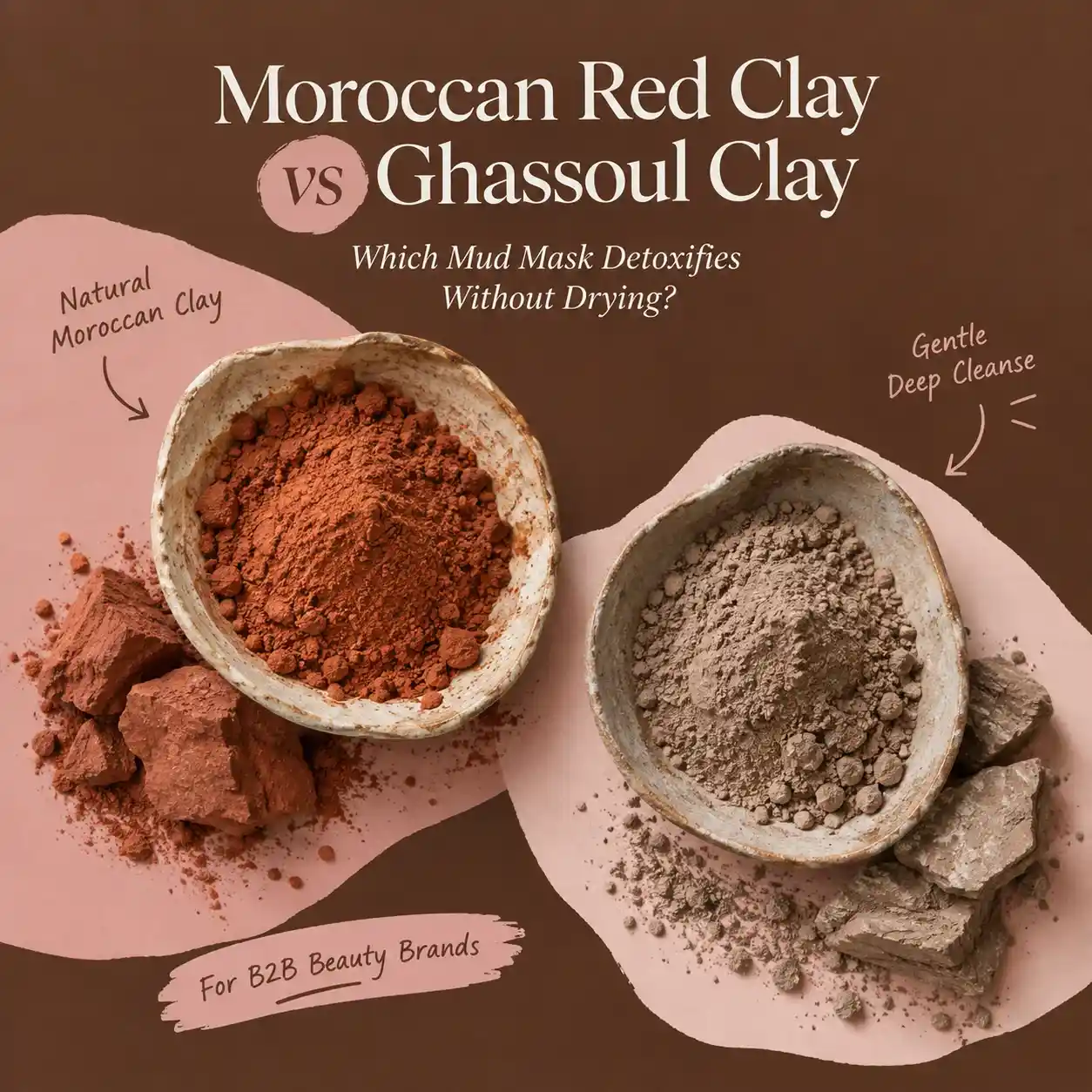
If you've spent any time browsing natural skincare shelves, you've probably come across two clays with almost mythical reputations: Moroccan Red Clay and Ghassoul (Rhassoul) Clay. Both are mined from Morocco, both are marketed as "detoxifying," and both promise glowing, clearer skin. But they are not interchangeable, and choosing the wrong one for your skin type can leave you tight, flaky, and irritated instead of refreshed.
This guide breaks down what each clay actually is, how they behave on the skin, and — most importantly — which one detoxifies effectively without over-drying.
What Is Moroccan Red Clay?
Moroccan Red Clay gets its color from a high concentration of iron oxide, the same mineral that gives many red soils their rusty hue. It's typically sourced from mineral-rich deposits and is prized in skincare for its gentle exfoliating texture and its ability to draw out impurities from the skin's surface without being overly aggressive.
Because of its finer, silkier texture compared to some other clays, Red Clay is often recommended for:
Sensitive or reactive skin
Dry or combination skin that still wants some detoxifying benefit
Anyone new to clay masking who wants a gentler introduction
Red Clay tends to absorb excess oil while leaving a thin mineral film that many users describe as softening rather than tightening.
What Is Ghassoul Clay?
Ghassoul (also spelled Rhassoul or Rassoul) is a unique volcanic clay mined almost exclusively from the Atlas Mountains region of Morocco. For centuries, it has been used in Moroccan hammams as both a skin and hair cleanser, prized for its exceptionally high silica and negatively charged mineral content, which allows it to bind to oil, dirt, and impurities like a magnet. If you want to try it yourself at home, our guide on
Ghassoul is known for:
A stronger, more traditional deep-cleansing effect
A smooth, almost soap-like lather when mixed with water
Long-standing use on both skin and scalp
Unlike many clays, Ghassoul doesn't rely purely on absorption — its layered mineral structure lifts debris away from the skin rather than simply soaking it up. This is also part of why it's a popular alternative to stronger clays; see our
Detox Power: How Do They Compare?
Both clays work through the same basic principle: as the mask dries, it draws moisture, oil, and surface debris out of the pores. The difference lies in intensity and mechanism.
Moroccan Red Clay offers a milder detox. It removes surface oil and light impurities but rarely leaves skin feeling "stripped." This makes it a better daily-adjacent option for people who mask two to three times a week.
Ghassoul Clay offers a deeper detox thanks to its structure. It's traditionally used for a more thorough hammam-style cleanse and is often preferred for oilier skin, congested pores, or an occasional deep-cleaning ritual rather than frequent use.
If your main concern is a gentle refresh, Red Clay usually wins. If you want a more intensive pore-clearing treatment, Ghassoul tends to deliver more noticeable results.
Which One Dries Out the Skin Less?
This is the question most people actually care about, and the answer depends on formulation as much as the clay itself.
Ghassoul Clay has a natural advantage here. Its unique mineral composition allows it to cleanse without needing to fully dry on the skin to be effective — many traditional methods recommend applying it as a paste and rinsing before it hardens completely, which limits moisture loss.
Moroccan Red Clay, while gentler in texture, can still dry out the skin if left on too long or applied too frequently, especially for those with naturally dry or mature skin.
The Real Key to Avoiding Dryness with Either Clay
Never let the mask fully harden and crack on the skin — rinse once it's tacky, not stone-dry
Mix with hydrating liquids like rosewater, plain water, or a few drops of argan oil instead of drying agents like apple cider vinegar
Follow immediately with a hydrating serum or facial oil
Limit use to 1–3 times per week depending on skin type
Used this way, Ghassoul Clay generally offers the better balance of detoxifying strength and skin comfort, while Red Clay is the safer choice for very sensitive or dry skin types that want a lighter touch. It's also worth noting that Ghassoul isn't limited to facial use — it's just as effective as a
Side-by-Side Comparison
| Factor | Moroccan Red Clay | Ghassoul Clay |
| Detox strength | Mild to moderate | Moderate to deep |
| Best for skin type | Sensitive, dry, combination | Oily, combination, congested |
| Drying risk | Moderate if overused | Lower when used correctly |
| Traditional use | Modern skincare, gentle masking | Centuries-old hammam ritual |
| Texture | Silky, fine | Smooth, slightly soapy |
| Frequency of use | 2–3x per week | 1–2x per week |
How to Use Either Clay Without Over-Drying Your Skin
Regardless of which clay you choose, the application method matters more than most people realize.
Mix with a hydrating liquid. Rosewater or plain filtered water works well; avoid mixing with lemon juice or vinegar unless you know your skin tolerates it.
Apply a thin, even layer. A thick cakey layer takes longer to dry and pulls more moisture from the skin than necessary.
Watch the clock, not the clay. Rinse as soon as the mask feels tacky rather than waiting for it to crack — cracking is a sign it has already pulled too much moisture.
Rinse with lukewarm water. Hot water strips natural oils further; lukewarm water is gentler on the skin barrier.
Moisturize immediately after. A clay mask temporarily opens the door for hydration to absorb better — don't skip this step.
Common Mistakes That Make Clay Masks Too Drying
Leaving the mask on until it's completely hard and cracking
Using clay masks daily instead of a few times per week
Mixing with alcohol-based toners or astringents
Skipping moisturizer afterward
Using a stronger clay (like Ghassoul) at the same frequency meant for a gentler one (like Red Clay)
Frequently Asked Questions
What is the main difference between Moroccan Red Clay and Ghassoul Clay?
Red Clay is gentler and better suited to sensitive or dry skin, while Ghassoul offers a deeper, more traditional detoxifying cleanse better suited to oilier or congested skin.
Which clay is better for dry skin?
Moroccan Red Clay is generally the safer option for dry skin due to its lighter absorbing action, though both clays can be made suitable with the right mixing liquid and shorter application time.
Can Ghassoul Clay be used on the face and hair?
Yes. Ghassoul has a long history of use as both a facial cleansing mask and a scalp/hair treatment in traditional Moroccan beauty rituals.
How often should I use a clay mask?
Most skin types do well with clay masking one to three times per week. Oilier skin can typically tolerate more frequent use, while dry or sensitive skin should stick to once or twice weekly.
Do clay masks actually remove toxins from the skin?
Clay masks primarily absorb excess oil, surface debris, and impurities from pores rather than "toxins" in a clinical sense. Their main proven benefit is deep cleansing and mild exfoliation rather than medical detoxification.
Final Thoughts
Neither clay is objectively "better" — the right choice depends on your skin type and what you want from your mask. If you want a gentle, low-risk option that still delivers a refreshed complexion, Moroccan Red Clay is the easier daily-adjacent pick. If you're after the deeper, time-tested detox that Moroccan hammams have relied on for generations, Ghassoul Clay is worth the slightly more careful application.
Whichever clay you choose, the difference between a glowing result and a tight, dry one usually comes down to how you use it — not just which one you pick. For more on sourcing authentic Moroccan minerals and pigments, take a look at our piece on