Chemical vs. Physical Exfoliation: Why an Exfoliating Glove is Better for Your Body
When building a skincare routine, most of our attention naturally gravities toward the face. We research serums, calculate acid percentages, and carefully select moisturizers. However, the skin below the neck accounts for roughly 90% of our total skin surface area, and it deserves just as much intentional care. Among all body-care techniques, exfoliation stands out as the single most transformative step for achieving soft, radiant, and touchably smooth skin.
As exfoliation has gained popularity in modern beauty culture, a major debate has emerged: Chemical vs. Physical Exfoliation. While chemical acids like alpha-hydroxy acids (AHAs) and beta-hydroxy acids (BHAs) have taken the facial skincare world by storm, body care presents a different set of physical demands. The skin on your arms, legs, back, and torso is significantly thicker and less sensitive than facial skin, requiring an approach tailored to its unique biology.
In this comprehensive guide, we will analyze how chemical and physical exfoliants function, compare their strengths and weaknesses on the body, and explore why a specialized tool—the exfoliating glove—remains the superior choice for body exfoliation.
Understanding Skin Cell Turnover and Exfoliation
Your skin is constantly regenerating. New skin cells are created in the deepest layer of the epidermis (the stratum basale) and gradually migrate upward toward the surface (the stratum corneum). As these cells reach the outer layer, they harden, lose their nuclei, and eventually shed to make room for newer, healthier cells. This natural process is known as cellular turnover.
In a young, healthy adult, a full turnover cycle takes roughly 28 to 30 days. However, as we age, experience environmental stress, or encounter dry weather, this cycle slows down significantly. When old, dead skin cells fail to shed efficiently, they pool on the surface of the skin. This buildup causes several common body skin issues:
- Dullness and Roughness: Light cannot reflect evenly off a layer of uneven, dead skin cells, making the skin look lackluster and feel coarse.
- Clogged Pores and Body Acne: Dead skin mixes with sebum (natural oils) and sweat, trapping bacteria inside hair follicles on the back, chest, and shoulders.
- Ingrown Hairs: Shed skin blocks the opening of hair follicles, forcing growing body hair to curl backward under the skin.
- Reduced Absorption of Moisturizers: Body creams, lotions, and oils sit on top of dead skin layers rather than penetrating deep into the epidermis.
Exfoliation is the deliberate process of removing these superficial dead skin cells, helping your body maintain its natural radiance, smoothness, and health.
What is Chemical Exfoliation?
Chemical exfoliation relies on hydroxy acids or natural enzymes to dissolve the intercellular lipid bonds—often described as the "glue"—that hold dead skin cells together. Once these bonds are broken, dead cells slough off naturally without requiring friction.
Common Types of Chemical Exfoliants
- Alpha-Hydroxy Acids (AHAs): Water-soluble acids derived from fruits, milk, or sugar cane. Common examples include glycolic acid (small molecule, deep penetration) and lactic acid (larger molecule, hydrating and gentle). AHAs work primarily on the skin surface.
- Beta-Hydroxy Acids (BHAs): Oil-soluble acids, most notably salicylic acid. Because BHAs dissolve in lipid layers, they penetrate deep into hair follicles to flush out trapped sebum and dead skin cells, making them popular for body acne.
- Poly-Hydroxy Acids (PHAs): Larger chemical structures that exfoliate very gently on the outer surface without penetrating deeply, suitable for extremely sensitive skin.
Pros and Cons of Chemical Exfoliation for the Body
| Advantages | Disadvantages |
|---|---|
| Does not rely on manual rubbing, eliminating friction risk. | Can be prohibitively expensive to apply across large surface areas daily. |
| Effective for targeted skin conditions like Keratosis Pilaris (KP). | Requires consistent application over weeks to see noticeable structural changes. |
| Penetrates deep into pores (specifically BHA/Salicylic Acid). | Increases sun sensitivity (photosensitivity), raising sunburn risks on exposed legs and arms. |
What is Physical Exfoliation?
Physical exfoliation (also known as mechanical exfoliation) physically lifts and sweeps away dead skin cells using manual friction. This category encompasses a wide range of tools and formulations, from granular scrubs to mechanical brushes and woven textiles.
Types of Physical Exfoliants
- Granular Body Scrubs: Formulations containing salt, sugar, ground coffee, or walnut shells suspended in an oil or gel base. While popular, granules can dissolve too quickly in warm water or create uneven pressure.
- Dry Brushes and Loofahs: Coarse natural fibers used to brush dry or wet skin. Loofahs, however, are notorious for trapping moisture and harboring bacteria over time.
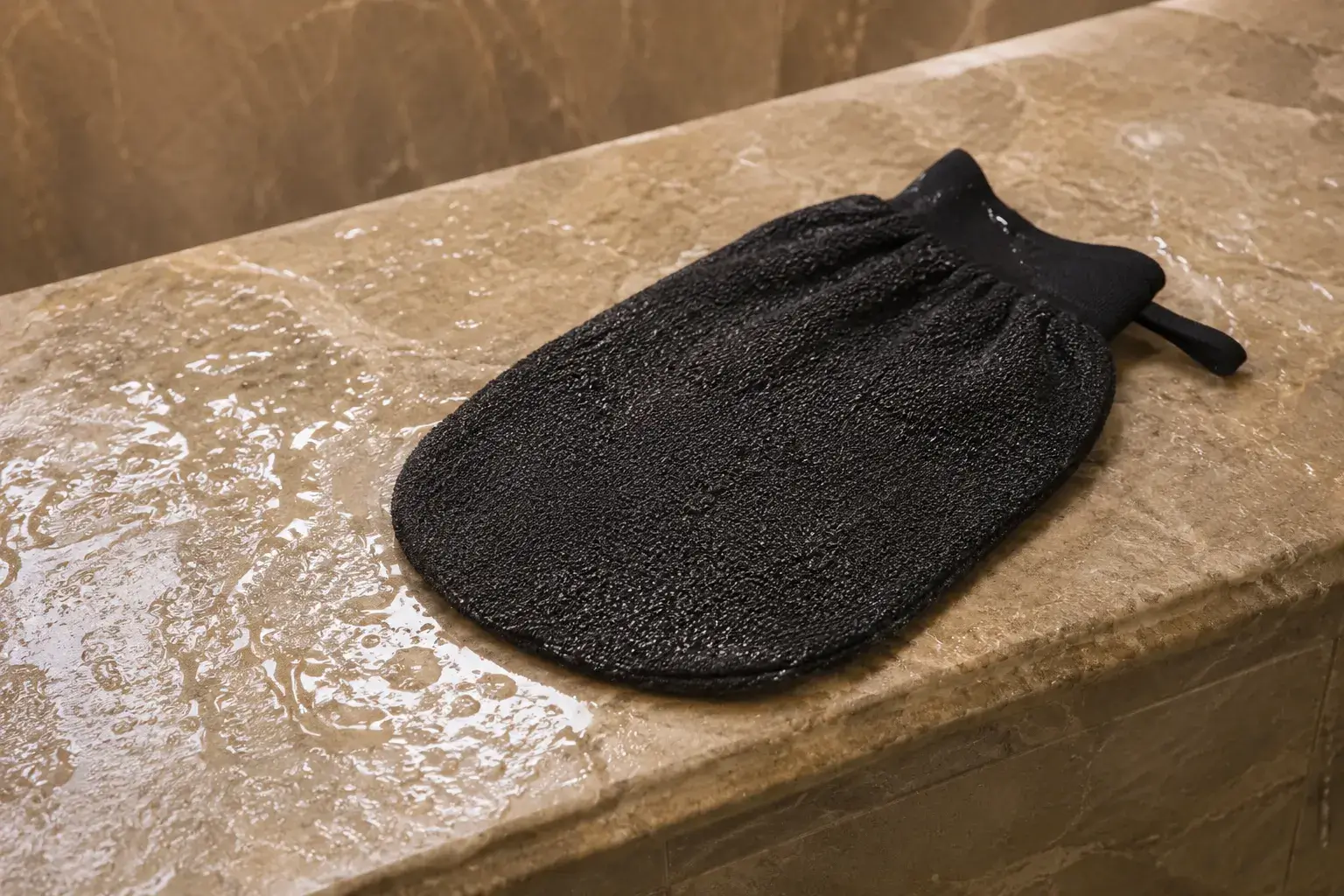
- Exfoliating Gloves: Viscose, silk, or textured fabric gloves worn over the hand, engineered specifically to catch, lift, and roll off dead skin when combined with warm water and steam.
Chemical vs. Physical Exfoliation: A Direct Body-Care Comparison
To evaluate which method performs better for body care, we must analyze how each method responds to the specific physical characteristics of body skin.
| Feature | Chemical Exfoliants (AHAs/BHAs) | Granular Body Scrubs | Exfoliating Glove |
|---|---|---|---|
| Immediate Visual Results | Low (Takes days/weeks) | Moderate | High (Instant dead skin roll-off) |
| Cost Efficiency | Low (Frequent repurchasing of creams) | Moderate | High (Single glove lasts months) |
| Environmental Footprint | Moderate (Plastic packaging & chemicals) | Variable (May contain micro-plastics or heavy oils) | Low (Reusable fabric, minimal waste) |
| Precision & Control | Low (Dependent on product concentration) | Moderate (Uneven granule distribution) | High (Controlled directly by hand pressure) |
| Rinse-Off Cleanliness | Leaves active chemical residue | Often leaves slippery oil coating | Leaves skin 100% clean and prepped |
Why an Exfoliating Glove is Better for Your Body
While chemical exfoliants excel on delicate facial skin where manual friction could disrupt delicate capillaries, the body presents a completely different environment. Here is why an exfoliating glove outperforms chemical treatments for body care:
1. Instant and Tangible Results
Chemical exfoliants work invisibly over days or weeks. In contrast, a high-quality exfoliating glove provides immediate, visible satisfaction. When used on warm, softened skin, the unique cross-weave texture catches dead keratin proteins, causing dead skin cells to visibly peel away into rolls. You can literally see the dead layer lifting off your body in a single shower session.
2. Superior Cost-Effectiveness and Sustainability
Covering your entire body—arms, legs, torso, and back—with high-grade glycolic or salicylic acid lotions requires consuming large quantities of packaged liquid products every single month. This approach is costly and generates significant plastic waste. A single durable exfoliating glove requires only warm water and can be washed, dried, and reused for months, making it both financially economical and eco-friendly.
3. Physical Relief for Texture and Ingrown Hairs
Ingrown hairs occur when dead surface skin traps emerging hair shafts underneath. While chemical solutions can slowly dissolve surface bonds, an exfoliating glove physically dislodges the cap of dead skin covering the follicle in real-time. This makes it an indispensable tool for anyone struggling with post-shaving bumps or seeking practical advice on how to get rid of strawberry legs fast.
4. No Risk of Chemical Photosensitivity
Chemical exfoliants like glycolic acid strip away the outer barrier and temporarily make skin significantly more sensitive to ultraviolet (UV) radiation. If you apply chemical exfoliants to your legs or arms before spending time outdoors, your risk of sun spots and solar damage rises. An exfoliating glove removes dead skin mechanically; once washed off, your skin is clean and ready for sun protection without residual chemical sensitivity.
5. Enhances Circulation and Lymphatic Drainage
The sweeping motion required when using an exfoliating glove provides an active bodily massage. Moving the glove in upward strokes toward the heart stimulates peripheral blood circulation and encourages lymphatic drainage. This helps reduce temporary fluid retention, leaving limbs feeling lighter and invigorated—a physical benefit that topical chemical lotions simply cannot offer.
6. Deep Rooted in Authentic Wellness Traditions
The mechanics of the exfoliating glove are far from a modern gimmick. They stem from centuries of proven body-care heritage. The iconic viscose fabric glove—historically known as the Kessa glove—is the central tool of the traditional Moroccan hammam ritual for softer brighter skin. For generations, bathers have used steam, plant-based black soap, and deep manual glove friction to thoroughly purify the body, proving that simplicity and proper technique often outshine complex synthetic formulas.
How to Use an Exfoliating Glove for Best Results
To experience the full benefits of physical exfoliation without causing skin irritation, follow this step-by-step method:
Step 1: Soften the Skin with Warm Water
Before applying the glove, spend 10 to 15 minutes in a warm bath or shower. The heat and moisture soften the outer layer of dead skin cells (the stratum corneum), making them ready to roll off easily. Do not apply body washes or slippery shower gels immediately before exfoliating, as excess slickness prevents the glove fabric from gripping the skin.
Step 2: Dampen the Glove
Wet your exfoliating glove thoroughly with warm water and wring out any excess. The glove should be damp, not dripping wet.
Step 3: Apply Firm, Long Strokes
Slip the glove onto your hand and begin rubbing your skin using long, firm vertical or circular strokes. Focus on one region at a time—such as your forearms, thighs, or calves. You will begin to see tiny rolls of dead skin lift off the body. Adjust your pressure based on the skin area: use lighter pressure over sensitive areas like the chest and firmer pressure on rough zones like elbows, knees, and heels.
Step 4: Rinse and Cleanse
Rinse your body thoroughly with lukewarm water to remove all shed skin particles. Wash your glove thoroughly with warm water and a mild soap, wring it out, and hang it in a dry, ventilated space to prevent mildew.
Step 5: Lock in Deep Moisture
Exfoliation opens up the surface layers of the skin, making it uniquely receptive to deep hydration. Immediately after drying off, apply a rich body oil or nourishing cream. If you enjoy multi-purpose botanical care, you might explore whether you can leave argan oil in hair overnight while using the remaining natural oil on your freshly exfoliated body skin.
When choosing post-exfoliation treatments, matching your oil type to your skin profile is key. For instance, comparing argan oil vs coconut oil for acne prone skin highlights why lightweight, non-comedogenic oils work best on body areas prone to clogged pores, like the back or chest. Additionally, adopting a holistic care approach—such as learning how to use argan oil for hair growth step by step guide—ensures your body, hair, and scalp all benefit from pure, nourishing ingredients post-wash.
Common Body Exfoliation Mistakes to Avoid
- Exfoliating Dry Skin: Using a textured glove on dry, un-steamed skin creates harsh friction that can lead to micro-scratches or redness. Always soften skin with water first.
- Over-Exfoliating: More is not always better. For most skin types, using an exfoliating glove 1 to 2 times per week is ideal. Over-exfoliating can compromise your moisture barrier and lead to irritation.
- Using Gloves on Broken or Sunburned Skin: Never exfoliate over open wounds, active eczema flare-ups, sunburns, or fresh shaving cuts.
- Neglecting Glove Hygiene: Because bathroom environments are humid, always hang your glove to dry completely between uses, and replace it every 2 to 3 months.
Frequently Asked Questions
Can I use an exfoliating glove every day?
No. Exfoliating daily with a physical glove can strip your skin's natural moisture barrier, leading to dryness, irritation, and overcompensation in oil production. For optimal skin health, limit physical exfoliation to 1–2 times per week.
Is an exfoliating glove suitable for sensitive skin?
Yes, provided you control the pressure. Unlike chemical exfoliants which act continuously once applied, a glove allows you to manually adjust how hard you rub. If you have sensitive skin, use light, sweeping motions and focus only on rougher areas like legs and elbows.
What is the difference between a loofah and an exfoliating glove?
A traditional loofah is a porous, spongy mesh or dried gourd that primarily creates lather with soap. An exfoliating glove features a specialized tight weave designed to grip and lift dead skin off the body without requiring heavy soapy lather. Gloves also offer far greater dexterity and control.
Should I use body wash with an exfoliating glove?
For the initial dead-skin removal phase, it is actually best to use the damp glove on plain, water-softened skin. Excessive soap can make the skin too slippery for the glove fabric to catch dead skin cells. You can cleanse with a gentle body wash after you finish exfoliating.
Final Thoughts
While chemical exfoliants certainly have their place in targeted facial care routines, the body demands an approach that accounts for thicker skin and larger surface areas. The physical exfoliating glove remains an unmatched tool: it delivers instant visible smoothness, improves natural circulation, prevents ingrown hairs, and costs a fraction of ongoing chemical treatments.
By incorporating an exfoliating glove into your weekly bath or shower ritual, you respect your skin's natural renewal process while enjoying an authentic, invigorating spa-like experience right at home.